Models
16 models
-
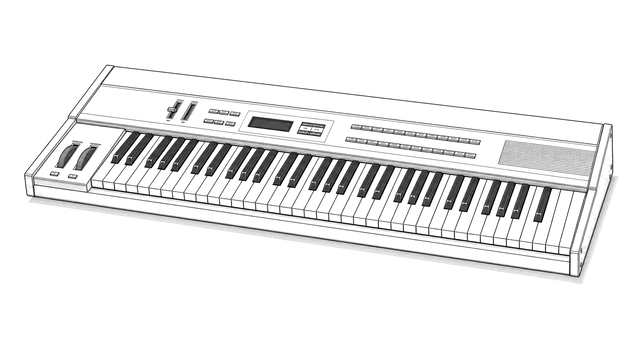
Yamaha DX7
Six-operator FM digital synthesizer
Synthesizer · Japan
Yamaha's landmark six-operator FM digital synthesizer, introduced in May 1983.
-
Oberheim OB-Xa
Polyphonic analog synthesizer
Synthesizer · United States
The Oberheim OB-Xa, released in 1980, is a polyphonic analog synthesizer with two oscillators per voice and the ability to split and layer sounds. Powerful and aggressive, its sound is famous from records such as Van Halen's 'Jump' and many other 1980s productions.
-
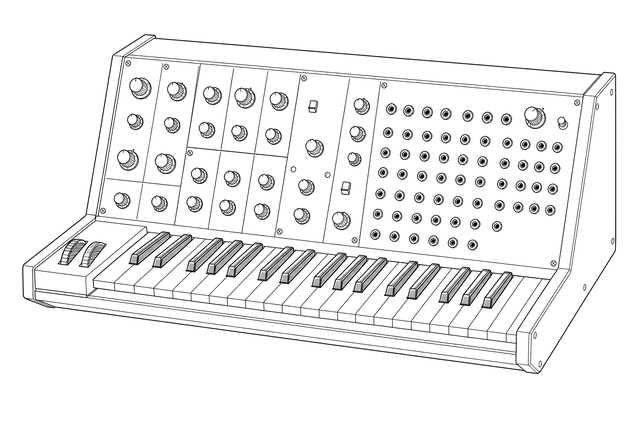
Korg MS-20
Patchable semi-modular monophonic analog synthesizer
Synthesizer · Japan
The Korg MS-20, released in 1978, is a patchable semi-modular monophonic analog synthesizer with two oscillators and a distinctive dual filter capable of aggressive resonance. Its hands-on patch bay and external signal processor made it a hugely influential and enduring instrument.
-
Waldorf Microwave
Wavetable synthesizer module
Synthesizer · Germany
The Waldorf Microwave, released in 1989, is a wavetable synthesizer module that carried forward the technology of the PPG Wave. Its digital wavetable oscillators paired with analog filters produced distinctive evolving, metallic, and digital textures.
-
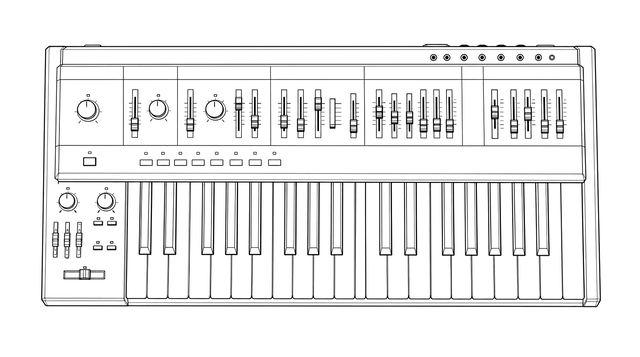
Roland SH-101
Monophonic analog synthesizer
Synthesizer · Japan
The Roland SH-101 is a monophonic analog synthesizer released in 1982. Lightweight and battery-capable, it pairs a single oscillator and resonant filter with a built-in sequencer and arpeggiator, and an optional handgrip let it be worn like a keytar. Its punchy bass and lead sounds made it a fixture of acid, techno, and electro.
-
Roland Jupiter-8
1981 polyphonic analog synthesizer
Synthesizer · Japan
The Roland Jupiter-8, introduced in 1981, is Roland's flagship eight-voice polyphonic analog synthesizer. With two oscillators per voice, versatile splits and layers, and patch memory, it delivered a bold, refined sound used across pop, film, and electronic music, and it remains one of the most coveted vintage polysynths.
-
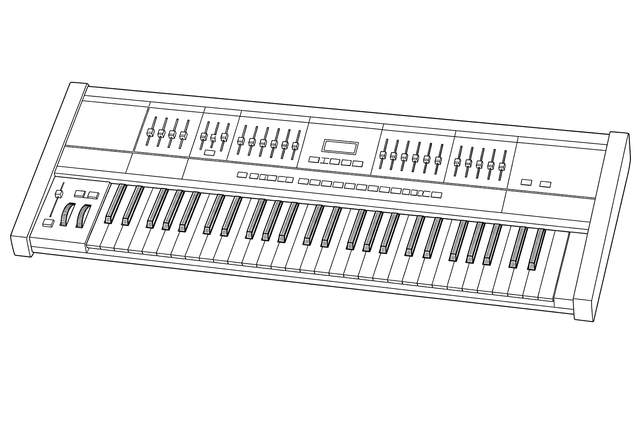
Roland Juno-106
Programmable polyphonic analog synthesizer
Synthesizer · Japan
The Roland Juno-106, introduced in 1984, is a six-voice polyphonic analog synthesizer that became one of Roland's most popular instruments. It offers one digitally controlled oscillator per voice, a resonant analog filter, a famous chorus, and full MIDI implementation, and its accessible slider-based panel made it a studio staple.
-
Ensoniq SQ-80
Eight-voice digital/analog hybrid synthesizer
Synthesizer · United States
The Ensoniq SQ-80, produced from 1988 to 1989, is an eight-voice 'cross-wave' digital/analog hybrid synthesizer and successor to the ESQ-1. It edits digital waveforms through analog-style four-pole low-pass filters, adds an expanded waveform set and polyphonic aftertouch on its 61-note keyboard, and includes an onboard sequencer.
-
Ensoniq VFX
Twenty-one-voice wavetable synthesizer workstation
Synthesizer · United States
The Ensoniq VFX, released in 1989, is a 21-voice digital synthesizer workstation using PPG-style wavetable synthesis with 109 selectable waveforms per patch. It features a 61-note polyphonic-aftertouch keyboard, a high-quality onboard effects processor, and (in the VFX-SD) an integrated sequencer and disk storage.
-
Oberheim Matrix-12
Twelve-voice analog synthesizer with matrix modulation
Synthesizer · United States
The Oberheim Matrix-12, introduced in 1985, is a twelve-voice analog synthesizer with extensive digital modulation routing. Each voice provides two oscillators, a noise source, a fifteen-mode multimode filter, five envelopes, five LFOs, ramp and tracking generators, and a deep modulation matrix, on a 61-note keyboard. It is widely regarded as one of the most powerful analog polysynths ever built.
-
Oberheim Xpander
Six-voice analog synthesizer module with matrix modulation
Synthesizer · United States
The Oberheim Xpander, introduced in 1984, is a six-voice rack-format analog synthesizer module and the architectural sibling of the Matrix-12. Each voice offers two oscillators, fifteen filter modes, five LFOs, five DADSR envelopes, ramp and tracking generators, and a flexible modulation matrix, making it a benchmark of analog synthesis flexibility in a keyboardless module.
-
Oberheim OB-X
Programmable analog polyphonic synthesizer
Synthesizer · United States
The Oberheim OB-X, released in 1979, was Oberheim's first fully integrated programmable polyphonic synthesizer, available in four-, six-, or eight-voice configurations. It replaced the earlier stacked-SEM approach with internal discrete voice boards and patch memory, with two VCOs per voice and a discrete low-pass filter, and a 61-note keyboard.
-
Oberheim OB-8
Eight-voice analog polyphonic synthesizer
Synthesizer · United States
The Oberheim OB-8, launched in early 1983, is an eight-voice two-part multitimbral analog synthesizer and the last of the original OB-series polysynths. Each voice has two VCOs and switchable two- and four-pole filters, with a 61-note keyboard, arpeggiator, programmable LFO and envelope modulation, expanded 'Page 2' functions, and MIDI on later units.
-
Waldorf Pulse 2
Analog monophonic and paraphonic synthesizer
Synthesizer · Germany
The Waldorf Pulse 2, released in 2013, is a compact analog desktop synthesizer with three analog oscillators plus a noise generator, hard sync, ring modulation, and filter FM, capable of monophonic play or up to eight-voice paraphonic operation. It offers multiple filter modes, an arpeggiator, and an eight-slot modulation matrix.
-
Oberheim Two Voice
Two-voice analog synthesizer (TVS-1)
Synthesizer · United States
The Oberheim Two Voice (TVS-1), produced from 1975 to 1979, was Oberheim's first keyboard synthesizer: two SEM voice modules coupled to a 37-note keyboard and a simple two-channel analog sequencer. It offered two independently programmable voices, each with the SEM's twin VCOs and multimode filter, and is regarded as one of the first compact polyphonic performance synthesizers.
-
Oberheim SEM
Semi-modular analog synthesizer voice module
Synthesizer · United States
The Oberheim SEM (Synthesizer Expander Module), introduced in 1974, was Oberheim's first product: a compact semi-modular single-voice analog synthesizer module with two VCOs and a distinctive two-pole multimode voltage-controlled filter offering low-pass, high-pass, band-pass, and notch responses. Stacked SEMs formed the basis of the Two Voice, Four Voice, and Eight Voice instruments, and its filter character was later revived in the OB-X8.