Models
Every model, most significant first.
201 models
-
Minimoog
Analog monophonic synthesizer
Synthesizer · United States
The Minimoog is a portable analog monophonic synthesizer made by Moog Music, with a 44-key keyboard and three oscillators feeding Moog's signature ladder filter. The original Minimoog is the Model D, later reissued by Moog Music.
-
Nord Lead
Virtual analog performance synthesizer family
Synthesizer · Sweden
The Nord Lead is a family of virtual analog synthesizers introduced by Clavia in 1995. The original Nord Lead pioneered the 'virtual analog' concept—digitally modeling analog synthesis with knob-per-function control—and its bright red instruments became staples on stage and in the studio.
-
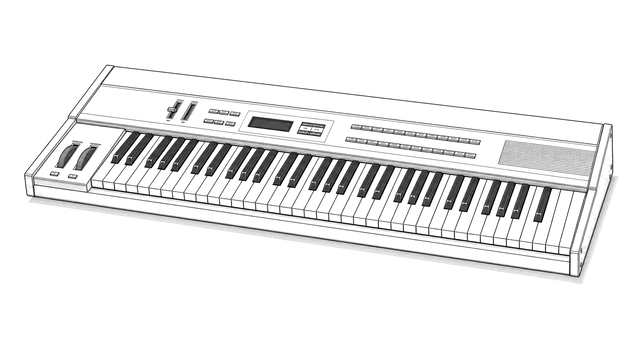
Yamaha DX7
Six-operator FM digital synthesizer
Synthesizer · Japan
Yamaha's landmark six-operator FM digital synthesizer, introduced in May 1983.
-
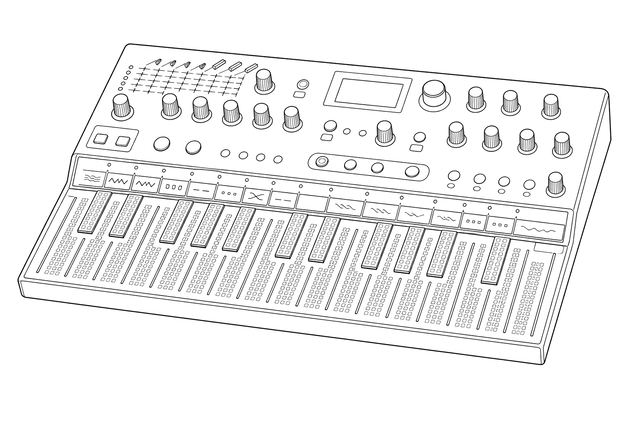
Arturia MicroFreak
Synthesizer model
Synthesizer · France
The Arturia MicroFreak, released in 2019, is a hybrid synthesizer pairing a versatile digital oscillator (with many synthesis models) and an analog filter, played from a distinctive touch-plate keyboard. Its modulation matrix, sequencer, and affordable price made it a popular experimental instrument.
-
Virtual ANS
Software synthesizer emulating the Russian ANS photoelectronic synthesizer
Synthesizer · Russia
Virtual ANS is a software synthesizer developed by Alexander Zolotov (WarmPlace) that recreates the ANS, the photoelectronic synthesizer built in the Soviet Union by engineer Evgeny Murzin and named after the composer Alexander Nikolayevich Scriabin. Like the original instrument, it produces sound from drawn images: the user paints on a vertical spectrogram-style canvas where the horizontal axis is time and the vertical axis is pitch, and the program resynthesizes that picture additively across a large bank of sine-tone oscillators. It runs on Windows, macOS, Linux, iOS, Android, and in a web browser, and is widely used for spectral, drone, and experimental sound design.
-
Sequential Prophet-5
Programmable polyphonic analog synthesizer
Synthesizer · United States
The Sequential Prophet-5, released in 1978, was the first fully programmable polyphonic analog synthesizer, letting players store and recall patches. Its five voices, dual oscillators, and warm sound made it a landmark instrument used across pop, film, and electronic music.
-
Oberheim OB-Xa
Polyphonic analog synthesizer
Synthesizer · United States
The Oberheim OB-Xa, released in 1980, is a polyphonic analog synthesizer with two oscillators per voice and the ability to split and layer sounds. Powerful and aggressive, its sound is famous from records such as Van Halen's 'Jump' and many other 1980s productions.
-
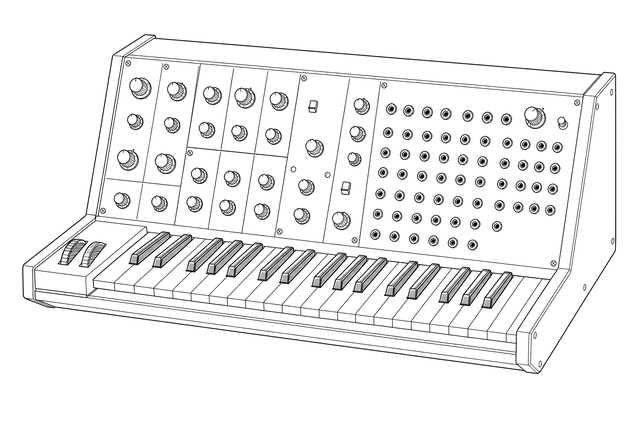
Korg MS-20
Patchable semi-modular monophonic analog synthesizer
Synthesizer · Japan
The Korg MS-20, released in 1978, is a patchable semi-modular monophonic analog synthesizer with two oscillators and a distinctive dual filter capable of aggressive resonance. Its hands-on patch bay and external signal processor made it a hugely influential and enduring instrument.
-
Waldorf Microwave
Wavetable synthesizer module
Synthesizer · Germany
The Waldorf Microwave, released in 1989, is a wavetable synthesizer module that carried forward the technology of the PPG Wave. Its digital wavetable oscillators paired with analog filters produced distinctive evolving, metallic, and digital textures.
-
Teenage Engineering OP–1
Portable synthesizer and sequencer
Synthesizer · Sweden
The Teenage Engineering OP-1, released in 2011, is a compact all-in-one portable synthesizer, sampler, and sequencer with a minimalist design, a small color display, and a playful, deep feature set that made it a cult favorite for sketching and performance.
-
Roland Boutique
Series of synthesizer modules from Roland
Synthesizer · Japan
Roland Boutique is a line of compact desktop sound modules introduced in 2015 that recreate classic Roland synthesizers and drum machines using the company's Analog Circuit Behavior modeling. Each small unit revisits an iconic instrument such as the Juno-106, Jupiter-8, or SH-101.
-
Novation Bass Station II
Monophonic analog bass synthesizer
Synthesizer · United Kingdom
The Novation Bass Station II, released in 2013, is a monophonic analog synthesizer focused on bass and lead sounds. With two oscillators, two filter types, a sub-oscillator, and a built-in sequencer and arpeggiator, it updates Novation's original Bass Station for modern use.
-
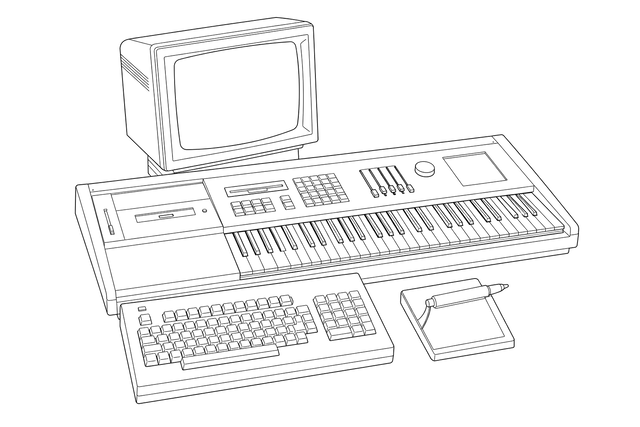
Fairlight CMI
Digital audio workstation
Synthesizer · Australia
The Fairlight CMI (Computer Musical Instrument), introduced in 1979, was one of the first commercial digital sampling workstations. Pairing a sampler with a light-pen computer interface and the influential 'Page R' sequencer, it transformed 1980s pop production despite its very high cost.
-
Electronic Sackbut
Electronic musical instrument
Synthesizer · Canada
The Electronic Sackbut, built by the Canadian inventor Hugh Le Caine beginning in 1945, is widely regarded as one of the first voltage-controlled synthesizers. Its keyboard offered continuous, expressive control of pitch, timbre, and volume through pressure- and touch-sensitive controls, anticipating ideas central to later synthesizers.
-
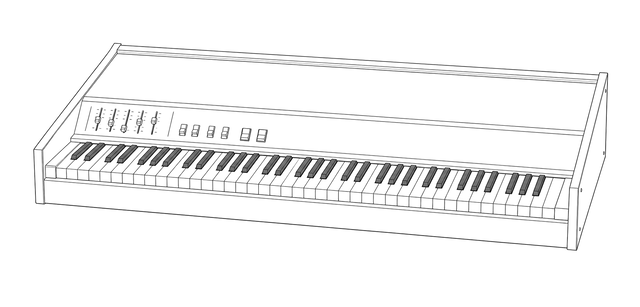
ELKA Rhapsody
Polyphonic multi-orchestral synthesizer
Synthesizer · Italy
The Elka Rhapsody is a polyphonic string synthesizer made by the Italian company Elka in the 1970s. A popular and roadworthy string machine, it produces violin- and viola-style ensemble sounds and was widely used by touring musicians.
-
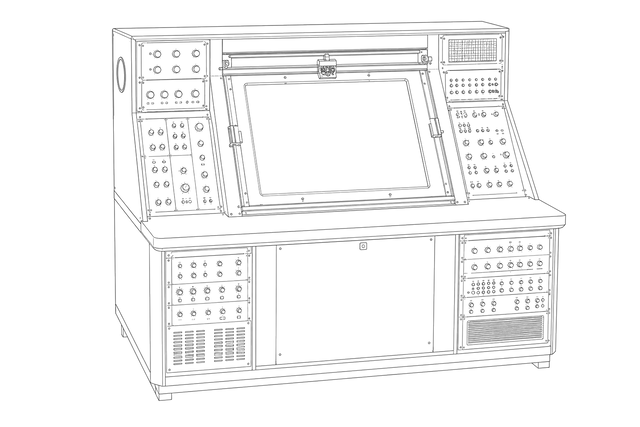
ANS synthesizer
Optically controlled music instrument
Synthesizer · Russia
The ANS synthesizer is a photoelectronic musical instrument designed by the Soviet engineer Evgeny Murzin and completed in 1957, named after the composer Alexander Nikolayevich Scriabin. It generates sound from images: marks made on glass plates coated with opaque mastic are read optically and resynthesized as continuous additive tones. A single instrument was built and was famously used by composers such as Edward Artemiev, including for Soviet film scores.
-
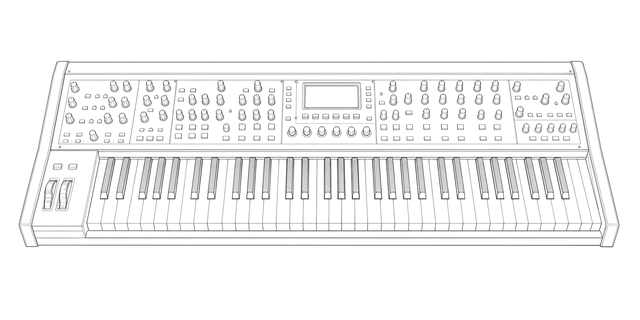
Alesis Andromeda A6
2000 multitimbral analog synthesizer
Synthesizer · United States
The Alesis Andromeda A6, released in 2000, is a sixteen-voice analog synthesizer with two oscillators and dual filters per voice plus extensive digital control and effects. A rare large-scale analog polysynth of its era, it is prized for its deep, powerful sound.
-
Arturia Brute Series
Family of Arturia analog Brute synthesizers
Synthesizer · France
The Arturia Brute series is the company's line of all-analog synthesizers known for their aggressive 'Brute' oscillators and Steiner-Parker filtering, ranging from the monophonic semi-modular MiniBrute 2, through the flagship modulation-matrix MatrixBrute, to the morphing polyphonic PolyBrute.
-
Yamaha Motif
Series of music workstations
Synthesizer · Japan
The Yamaha Motif is a series of flagship music workstations launched in 2001 that became industry standards for production and live performance. Built on sample-based synthesis with sampling, sequencing, and effects, the Motif line ran through several generations (ES, XS, XF).
-
Synclavier
Early digital synthesizer
Synthesizer · United States
The Synclavier, developed by New England Digital from the late 1970s, was a pioneering and extremely expensive digital synthesizer and sampling system. Combining FM and additive synthesis with later sampling and a computer-based interface, it was a centerpiece of high-end 1980s production.
-
Siel Orchestra
Analog synthesizer
Synthesizer · Italy
The Siel Orchestra is a polyphonic string and ensemble synthesizer made by the Italian company SIEL in the late 1970s, offering string, brass, organ, and piano-style voices. It was also marketed in the United States by ARP as the ARP Quartet.
-
Persephone
Analog fingerboard synthesizer
Synthesizer · France
The Persephone is an analog fingerboard synthesizer made by the French company Eowave. Played by sliding a finger along a ribbon rather than pressing keys, it produces continuous, expressive monophonic tones reminiscent of early ribbon instruments such as the Ondes Martenot.
-
Oberheim DSX
Early digital polyphonic music sequencer
Synthesizer · United States
The Oberheim DSX is a digital sequencer released in 1981 as part of Oberheim's integrated 'System' alongside the OB-Xa synthesizer and DMX drum machine. It recorded and played back note data to automate performances in the early days of integrated electronic setups.
-
Oberheim OB-X Series
Series of Oberheim integrated programmable analog polysynths
Synthesizer · United States
The Oberheim OB-X series is the line of integrated, programmable analog polyphonic synthesizers that defined the Oberheim sound from 1979 onward. Beginning with the OB-X and continuing through the OB-Xa and OB-8, the series replaced the earlier stacked-SEM voice cards with internal voice boards and patch memory. The modern OB-X8 revives the line, combining the OB-X, OB-Xa, and OB-8 voice architectures in one instrument.
-
Logan String Melody
Synthesizer model
Synthesizer · Italy
The Logan String Melody is a polyphonic string synthesizer made by the Italian company Logan in the 1970s. Like other string machines of the era, it produces warm, chorused ensemble string and orchestral sounds.
-
Korg Volca
Series of synthesizer modules from Korg
Synthesizer · Japan
Korg Volca is a series of compact, affordable, battery-powered instruments introduced in 2013. Each small unit focuses on a specific role—such as analog bass, lead, drums, or sampling—and includes a built-in sequencer and sync connections, encouraging hands-on jamming and multi-unit setups.
-
Freeman string symphonizer
Synthesizer model
Synthesizer
The Freeman String Symphonizer is an early string synthesizer associated with the British musician Ken Freeman, a pioneer of the string-synth sound. It produces the lush, polyphonic ensemble-string tones that became widely used in 1970s pop and rock.
-
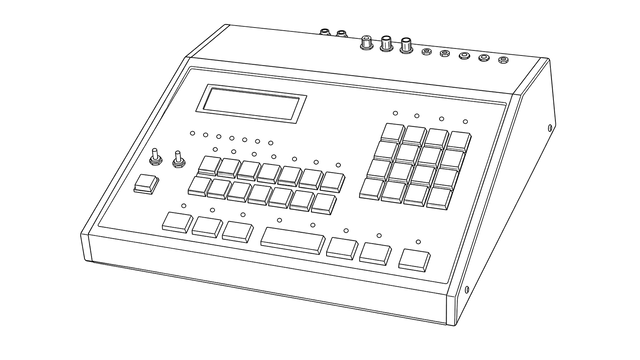
EDP Spider
Early digital music sequencer
Synthesizer · United Kingdom
The EDP Spider is an early digital sequencer from Electronic Dream Plant, designed to step- and real-time-sequence the company's synthesizers such as the Wasp. It was among the affordable microprocessor-based sequencers that appeared at the end of the 1970s.
-
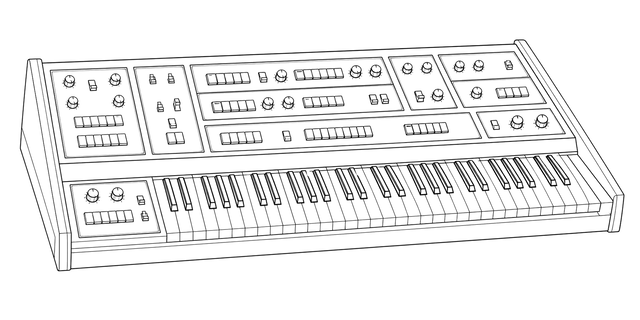
Elka Synthex
Polyphonic analog synthesizer
Synthesizer · Italy
The Elka Synthex, released in 1981, is an eight-voice polyphonic analog synthesizer made by the Italian company Elka. With two oscillators per voice, a multimode filter, and a built-in sequencer, its powerful sound was famously used by Jean-Michel Jarre and others.
-
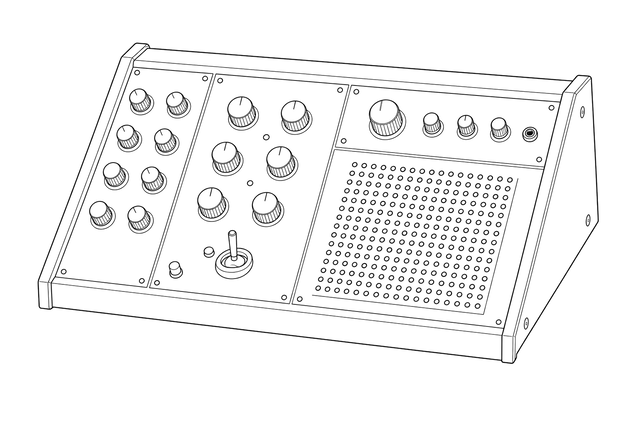
EMS VCS 3
Synthesizer model
Synthesizer · United Kingdom
The EMS VCS 3, released in 1969, is a compact British modular analog synthesizer that routes signals through a distinctive pin-matrix patch board instead of cords. Portable and idiosyncratic, it was embraced by experimental and progressive musicians and is one of the most iconic early synthesizers.
-
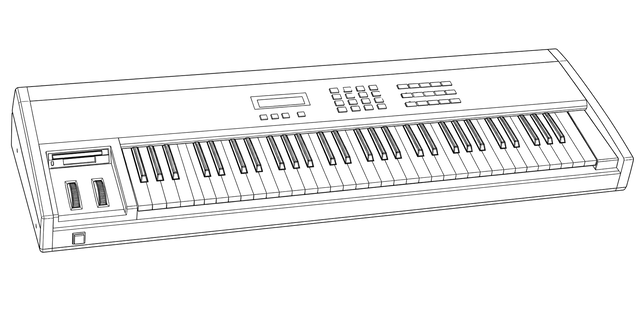
Ensoniq Mirage
Polyphonic synthesizer
Synthesizer · United States
The Ensoniq Mirage, released in 1984, was an affordable 8-bit digital sampling keyboard that helped bring sampling to working musicians. Its gritty sound and disk-based sample loading made it a popular and characterful early sampler.
-
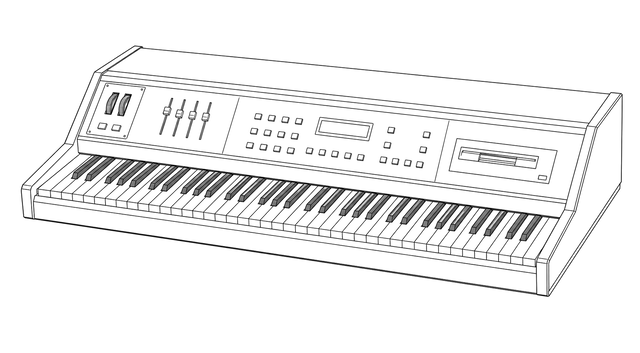
E-mu Emulator
Series of digital sampling synthesizers
Synthesizer · United States
The E-mu Emulator is a series of digital sampling keyboards and workstations E-mu Systems introduced in 1981. Among the first affordable samplers, the Emulator line let musicians record and play back real sounds across a keyboard and was influential in 1980s pop and film music.
-
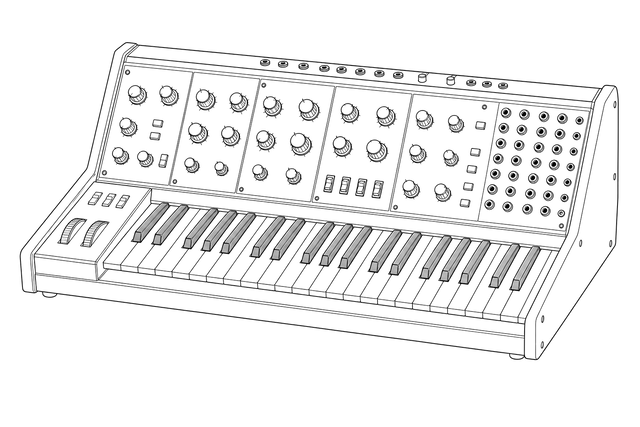
Behringer Poly D
Analog synthesizer
Synthesizer · Germany
The Behringer Poly D is a four-voice paraphonic analog synthesizer modeled on the classic Minimoog architecture, adding a fourth oscillator, a built-in sequencer, effects, and paraphonic playback at a budget price.
-
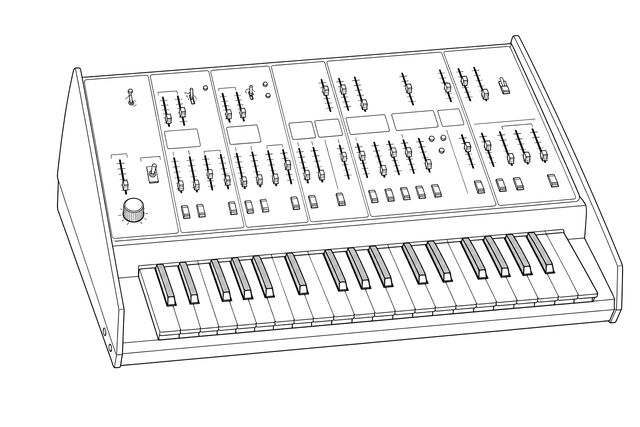
ARP Odyssey
Analog synthesizer from 1972
Synthesizer · United States
The ARP Odyssey, introduced in 1972, is a compact duophonic analog synthesizer that became ARP's most popular instrument and a key rival to the Minimoog. With two oscillators, a distinctive resonant filter, and a slider-based panel, its punchy leads and basses appear across rock and electronic music.
-
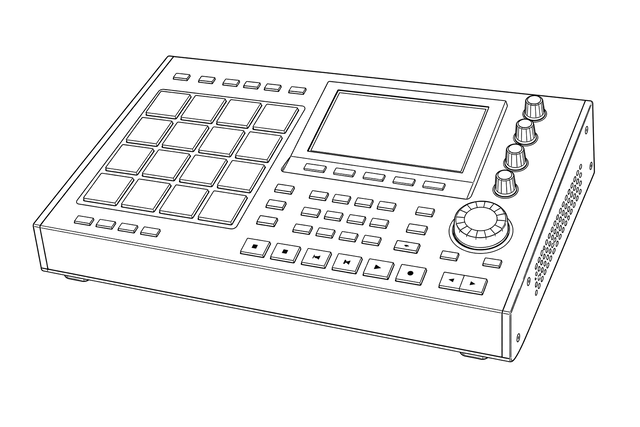
Akai MPC
Electronic musical instrument
Synthesizer · Japan
The Akai MPC (MIDI Production Center) is a family of sampler-sequencers, first released in 1988, that combined sampling, drum-pad performance, and sequencing in one unit. Developed with Roger Linn, the MPC became a central tool of hip-hop and electronic production and remains an industry standard.
-
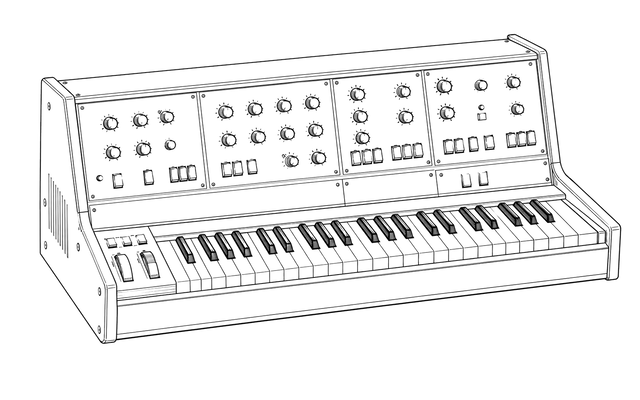
Aelita
Soviet synthesizer
Synthesizer · Russia
The Aelita is an analog synthesizer produced in the Soviet Union during the 1980s. It is valued today mainly by collectors of Soviet-era electronic instruments.
-
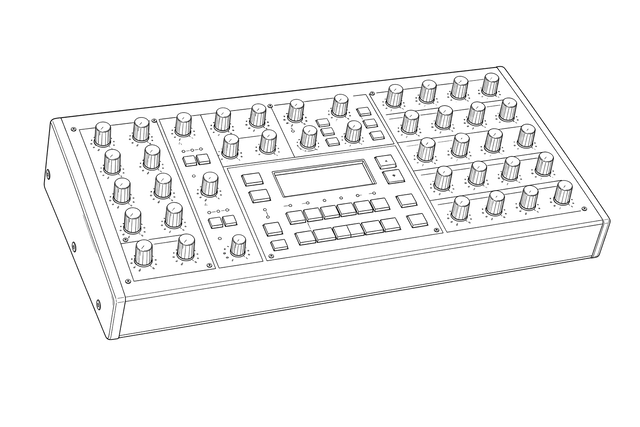
Access Virus
Virtual analog synthesizer
Synthesizer · Germany
The Access Virus is a line of virtual analog synthesizers introduced in 1997 that became known for powerful, detailed digital modeling and a rich effects section. Widely used in electronic and pop production, the Virus evolved over many models into one of the most successful modern hardware synth lines.
-
Waldorf Quantum & Iridium Series
Family of Waldorf multi-engine digital synthesizers
Synthesizer · Germany
The Waldorf Quantum and Iridium form a family of flagship multi-engine synthesizers sharing the same five oscillator modes per voice - wavetable, waveform (virtual analog), particle (sampling and granular), resonator, and kernels (FM) - with patches interchangeable between them. The Quantum is the keyboard flagship; the Iridium condenses the same engine into a desktop unit.
-
Novation Peak & Summit Series
Family of Novation New Oxford Oscillator polysynths
Synthesizer · United Kingdom
The Novation Peak and Summit form a family of hybrid polyphonic synthesizers built around the FPGA-generated New Oxford Oscillators (offering analogue-style, wavetable, and FM oscillator behavior) feeding an analog state-variable filter per voice. The desktop Peak provides eight voices; the keyboard Summit doubles this to a bi-timbral sixteen voices.
-
Oberheim Matrix Series
Family of Oberheim matrix-modulation analog synthesizers
Synthesizer · United States
The Oberheim Matrix family comprises the analog synthesizers built around extensive matrix modulation and Curtis-based voice cards introduced in the mid-1980s, including the rack-format Xpander and the flagship 12-voice Matrix-12, along with the later Matrix-6 and Matrix-1000. These instruments paired analog signal paths with deep digital modulation routing.
-
Elektron Digi Series
Family of Elektron compact digital instruments
Synthesizer · Sweden
The Elektron Digi series is the company's line of compact desktop instruments sharing a streamlined workflow, including the Digitakt sampler and drum machine and the Digitone FM synthesizer.
-
Ensoniq ESQ Series
Family of Ensoniq digital/analog hybrid synthesizers
Synthesizer · United States
The Ensoniq ESQ family comprises the company's late-1980s digital/analog hybrid synthesizers, beginning with the ESQ-1 and continuing with the SQ-80. They combined digitally sampled and synthetic waveforms with analog-style four-pole low-pass filtering and an onboard sequencer.
-
Ensoniq VFX / TS Workstations
Family of Ensoniq music-production synthesizer workstations
Synthesizer · United States
The Ensoniq VFX and TS workstations form the company's flagship synthesizer-workstation family, pairing wavetable-style digital synthesis with high-quality onboard effects, polyphonic aftertouch keyboards, and an integrated sequencer, from the VFX and VFX-SD to the TS-10 and TS-12.
-
Elektron Analog Series
Family of Elektron analog instruments
Synthesizer · Sweden
The Elektron Analog series is the company's line of full-size desktop instruments built on fully analog signal paths and Elektron's step sequencer, including the Analog Four synthesizer and the Analog Rytm drum machine.
-
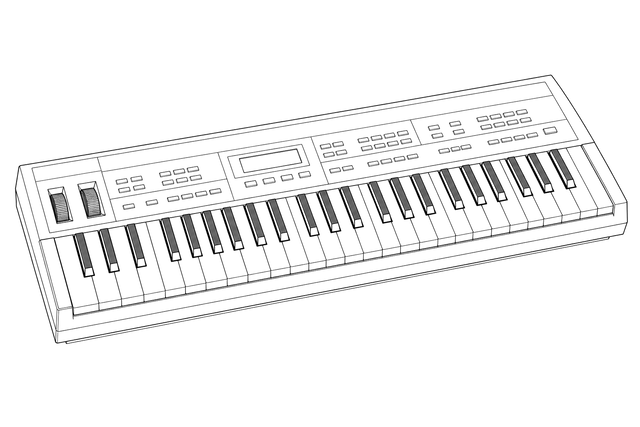
Casio CZ synthesizers
Family of synthesizers
Synthesizer · Japan
The Casio CZ synthesizers are a family of affordable digital synthesizers introduced in 1984 using Casio's Phase Distortion synthesis, a technique that produced varied digital tones at low cost. The line, including the CZ-101 and CZ-1000, helped bring digital synthesis to a wide audience.
-
Arturia Freak Series
Family of Arturia experimental hybrid synthesizers
Synthesizer · France
The Arturia Freak series is the company's line of compact experimental hybrid synthesizers, combining digital oscillator engines with analog filtering. It includes the MicroFreak and the dual-engine MiniFreak.
-
Yamaha TX81Z
Multi-part FM tone-generator module
Synthesizer · Japan
A Yamaha FM tone-generator module containing the equivalent of eight four-operator FM synthesizers.
-
Yamaha DX1
DX Series FM digital synthesizer
Synthesizer · Japan
A Yamaha DX Series FM digital synthesizer introduced in 1983 and part of the original DX Series lineup discussed in Yamaha's official synth history.
-
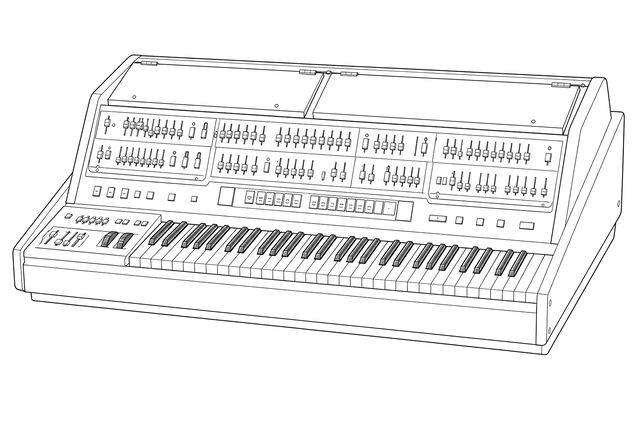
Yamaha CS-80
Flagship CS Series polyphonic analog synthesizer
Synthesizer · Japan
The flagship Yamaha CS Series polyphonic analog synthesizer; Yamaha's official history says it debuted in 1977 with eight-note polyphony.
-
Yamaha MOTIF XS7
Synthesizer model
Synthesizer · Japan
The Yamaha Motif XS7 is the 76-key model in the Motif XS generation (2007) of Yamaha's workstation line, offering the XS sound engine, sampling, and sequencing.