Models
11 models
-
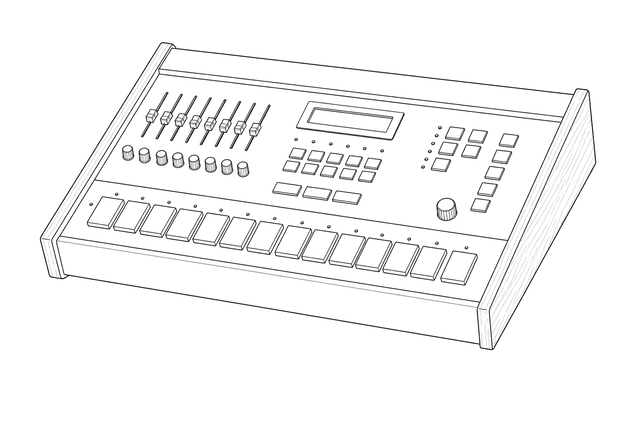
Linn LM-1
The first drum machine to use samples of real drums
Drum machine · United States
The Linn LM-1 Drum Computer, released in 1980 by Roger Linn, was the first drum machine to use digital samples of real acoustic drums. Expensive and produced in small numbers, its realistic sounds and programmable patterns made it hugely influential on 1980s pop production.
-
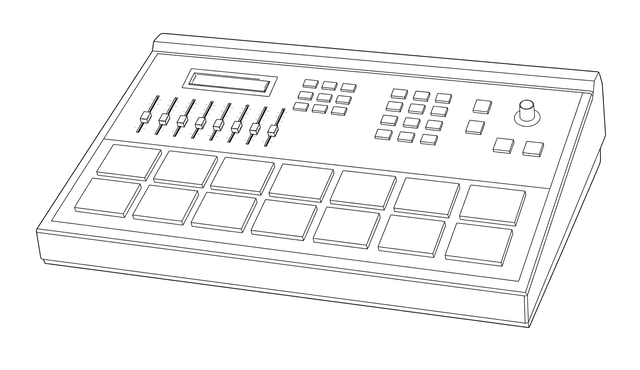
E-mu Drumulator
Drum machine model
Drum machine · United States
The E-mu Drumulator, released in 1983, is an affordable digital drum machine that plays back sampled drum sounds. Its 8-bit samples and step programming give it a characterful sound, and replaceable sound chips and a low price helped make it widely used.
-
Sequential TOM
A cheaper Drumtraks with programmable tuning
Drum machine · United States
TOM was Sequential's budget machine: fewer voices than Drumtraks, tape sound-loading, and a following among people who like their drum machines slightly wrong.
-
Sequential Drumtraks
Sequential Circuits' sampled drum machine
Drum machine · United States
Drumtraks put thirteen sampled voices, individual tuning, and MIDI into a machine aimed squarely at the LinnDrum, and its chips can be swapped for other sounds — which is why no two are quite alike now.
-
Linn 9000
Drum machine and MIDI sequencer in one
Drum machine · United States
The 9000 combined sampled drums, velocity-sensitive pads, and a 32-track MIDI sequencer, and its sampling option arrived as an upgrade. It was ambitious enough to help bankrupt the company, and its ideas went straight into the MPC.
-
Oberheim DX
The DMX with fewer voices and the same character
Drum machine · United States
The DX carried the DMX's sound into a smaller, cheaper machine with six voices and swappable sound chips, and shares its reputation among people who own both.
-
Oberheim DMX
The drum machine of early hip-hop
Drum machine · United States
The DMX sampled real drums like the LM-1 but sounded harder and cost less, with individual outputs and tuning per voice. Run-DMC, Afrika Bambaataa, New Order, and Davy DMX — who took his name from it — made it the defining rhythm box of the early 1980s.
-
Alesis HR-16
Sixteen-bit drums at a garage-band price
Drum machine · United States
The HR-16 put forty-nine sixteen-bit samples and a proper sequencer into a machine costing a few hundred dollars, and made a decent-sounding drum machine ordinary equipment rather than a studio purchase.
-
Alesis SR-16
Probably the best-selling drum machine ever made
Drum machine · United States
The SR-16 stayed in production for decades on the strength of two things: velocity-switched samples with real ambience, and a price that made it the default metronome-with-a-personality for every guitarist and songwriter who owned one.
-
LinnDrum
The LM-1 made affordable, and everywhere
Drum machine · United States
The LinnDrum (LM-2) cut the LM-1's price by more than half and sold ten times as many. Its snare, handclap, and cabasa are so recorded that hearing them now dates a track to within a couple of years.
-
E-mu SP-12
Sampling drum machine, and the SP-1200's parent
Drum machine · United States
The SP-12 let a producer sample their own drums into a twelve-bit machine with a sequencer, and its Turbo version added enough memory to be usable. Everything the SP-1200 is famous for starts here.