Models
32 models
-
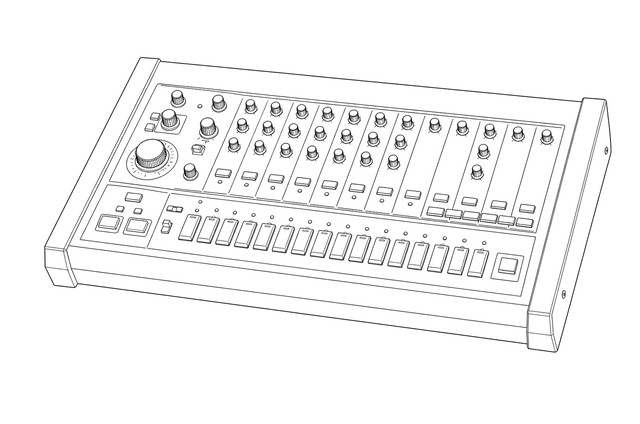
Roland TR-808
Analog drum machine
Drum machine · Japan
The Roland TR-808 Rhythm Composer is a programmable analog drum machine that Roland produced from 1980 to 1983. Its sounds are generated by analog circuitry rather than samples, giving it a distinctive booming kick, snappy snare, and sizzling cymbals and hi-hats. Commercially unsuccessful at launch, it became one of the most influential instruments in popular music, defining the low end of hip-hop, electro, and dance records and remaining a sought-after sound decades later.
-
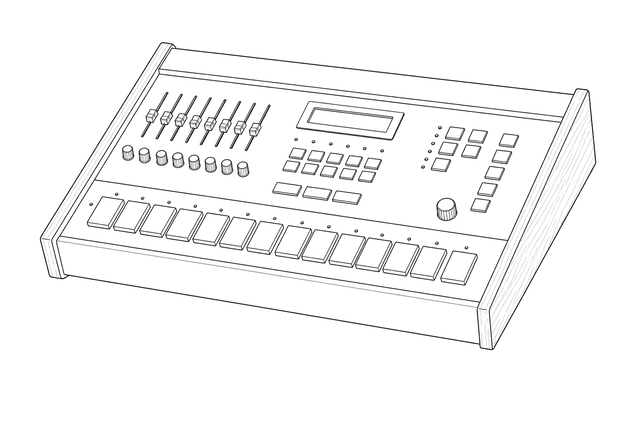
Linn LM-1
The first drum machine to use samples of real drums
Drum machine · United States
The Linn LM-1 Drum Computer, released in 1980 by Roger Linn, was the first drum machine to use digital samples of real acoustic drums. Expensive and produced in small numbers, its realistic sounds and programmable patterns made it hugely influential on 1980s pop production.
-
Pocket Operators
Series of miniature synthesizers, drum machines and grooveboxes by Teenage Engineering
Drum machine · Sweden
Pocket Operators are a line of ultra-compact, affordable, calculator-sized instruments from Teenage Engineering, introduced in 2015. Each unit focuses on a role such as rhythm, bass, lead, or sampling, with a small LCD, a built-in sequencer, and sync, designed for pocketable, playful music-making.
-
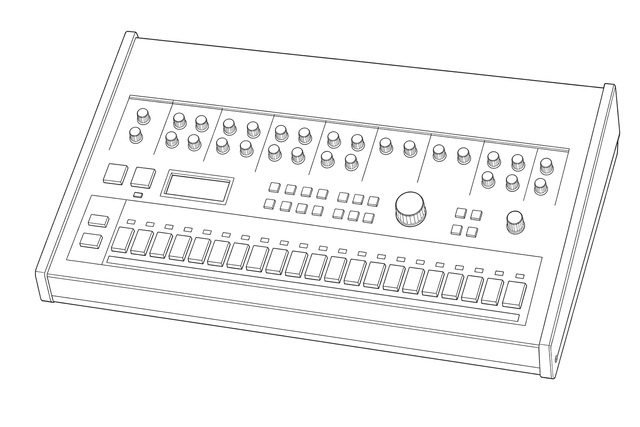
Roland TR-909
Drum machine
Drum machine · Japan
The Roland TR-909 Rhythm Composer, introduced in 1983, is a drum machine that combined analog-synthesized drum voices with sampled cymbals and hi-hats. It added MIDI and a refined step sequencer, and its punchy kick, snappy snare, and bright hats became foundational to house and techno.
-
Roland TR-606
Drum machine
Drum machine · Japan
The Roland TR-606 Drumatik is a compact analog drum machine introduced in 1981 as a rhythmic companion to the TB-303 Bass Line. It generates its drum and cymbal sounds with analog circuitry and offers step programming, and its thin, punchy voices became a staple of electro, techno, and experimental electronic music.
-
Roland TR-707
Drum machine
Drum machine · Japan
The Roland TR-707 Rhythm Composer is a 1985 drum machine that replaced the analog voices of the TR-808 and 909 with digital samples of acoustic and electronic drums. It introduced a clear LCD grid for step programming and pattern chaining and remained popular for its straightforward workflow and crisp, dry sounds.
-
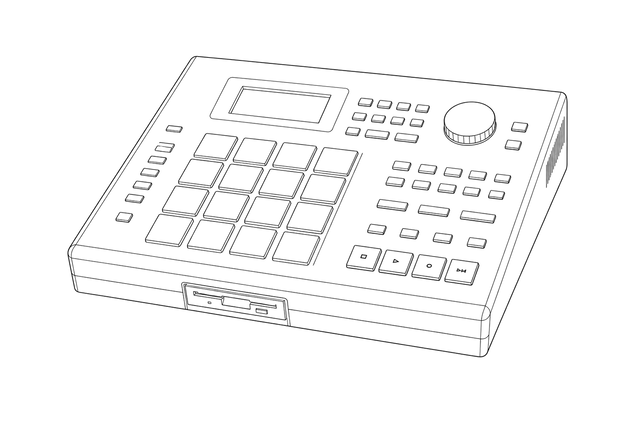
Yamaha RY30
Drum Machine
Drum machine · Japan
The Yamaha RY30, released in 1990, is a digital drum machine that plays editable sampled drum sounds. It offers programmable patterns, parameter editing of each voice, and an expandable sound set for electronic and pop production.
-
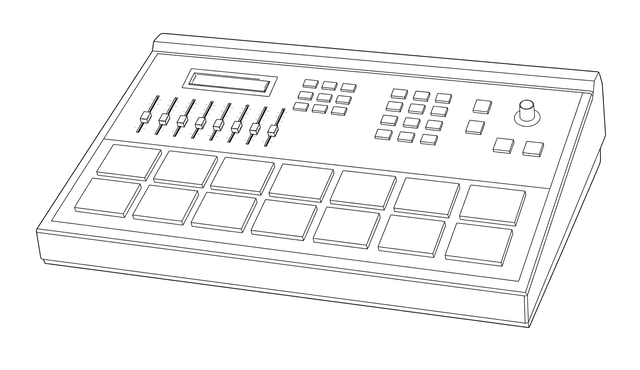
E-mu Drumulator
Drum machine model
Drum machine · United States
The E-mu Drumulator, released in 1983, is an affordable digital drum machine that plays back sampled drum sounds. Its 8-bit samples and step programming give it a characterful sound, and replaceable sound chips and a low price helped make it widely used.
-
Sequential TOM
A cheaper Drumtraks with programmable tuning
Drum machine · United States
TOM was Sequential's budget machine: fewer voices than Drumtraks, tape sound-loading, and a following among people who like their drum machines slightly wrong.
-
Yamaha RX11
Yamaha's answer to the LinnDrum
Drum machine · Japan
The RX11 sampled acoustic drums at twelve bits with individual outputs and MIDI, and its dry, clean voices sit under a great deal of mid-1980s pop that wanted the Linn sound without the Linn.
-
Elektron Machinedrum
Synthesis engines, not samples
Drum machine · Sweden
The Machinedrum builds each voice from a chosen synthesis machine — analogue modelling, FM, wavetable, or short samples — and drives them with Elektron's parameter-lock sequencer, so a pattern can change any parameter on any step.
-
Sequential Drumtraks
Sequential Circuits' sampled drum machine
Drum machine · United States
Drumtraks put thirteen sampled voices, individual tuning, and MIDI into a machine aimed squarely at the LinnDrum, and its chips can be swapped for other sounds — which is why no two are quite alike now.
-
Roland TR-505
Cheap sampled drums with a real sequencer
Drum machine · Japan
The 505 put PCM samples and the TR sequencer into a plastic box at a price that made it a first drum machine for a generation, and it turns up on more early house and hip-hop demos than its reputation suggests.
-
Boss DR-55 Dr. Rhythm
A programmable drum machine the size of a paperback
Drum machine · Japan
The DR-55 had four analogue voices and a sixteen-step grid programmed one instrument at a time, ran on a nine-volt battery, and cost almost nothing. For many players in 1980 it was the first machine they could actually program.
-
Roland CR-78 CompuRhythm
The first programmable Roland rhythm machine
Drum machine · Japan
The CR-78 kept the preset patterns of a rhythm box but let a player write four of their own and store them, which is the moment the drum machine stopped being an accompaniment appliance. Its soft, woody analogue voices open records by Blondie, Phil Collins, and Ultravox.
-
Yamaha RX5
Sampled drums a programmer could reshape
Drum machine · Japan
The RX5 gave each voice envelope, pitch, and filter editing plus cartridge expansion, which made it less a box of drums than a small percussion synthesizer.
-
Korg DDD-1
Sampled drums with cartridge expansion
Drum machine · Japan
The DDD-1 combined sampled voices with ROM cartridges that added more, plus per-voice outputs and tuning — a machine built for a studio that wanted to change its drum sounds without changing machines.
-
Linn 9000
Drum machine and MIDI sequencer in one
Drum machine · United States
The 9000 combined sampled drums, velocity-sensitive pads, and a 32-track MIDI sequencer, and its sampling option arrived as an upgrade. It was ambitious enough to help bankrupt the company, and its ideas went straight into the MPC.
-
Oberheim DX
The DMX with fewer voices and the same character
Drum machine · United States
The DX carried the DMX's sound into a smaller, cheaper machine with six voices and swappable sound chips, and shares its reputation among people who own both.
-
Roland TR-8S
The TR line modelled, with samples alongside
Drum machine · Japan
The TR-8S runs Roland's circuit-modelled 808, 909, 606, and 707 voices next to user samples, with per-instrument effects and outputs. It is the current answer to owning the originals.
-
Oberheim DMX
The drum machine of early hip-hop
Drum machine · United States
The DMX sampled real drums like the LM-1 but sounded harder and cost less, with individual outputs and tuning per voice. Run-DMC, Afrika Bambaataa, New Order, and Davy DMX — who took his name from it — made it the defining rhythm box of the early 1980s.
-
Alesis HR-16
Sixteen-bit drums at a garage-band price
Drum machine · United States
The HR-16 put forty-nine sixteen-bit samples and a proper sequencer into a machine costing a few hundred dollars, and made a decent-sounding drum machine ordinary equipment rather than a studio purchase.
-
Roland TR-626
The 505's larger successor
Drum machine · Japan
The 626 widened the 505's sample set to thirty voices with Latin percussion included, and kept the same step-and-tap sequencer. It became a staple of home studios in the late 1980s.
-
Casio RZ-1
A cheap machine that could sample
Drum machine · Japan
The RZ-1 offered four seconds of sampling alongside its stock voices at a consumer price, which made user-sampled drums reachable years before that was normal.
-
Alesis SR-16
Probably the best-selling drum machine ever made
Drum machine · United States
The SR-16 stayed in production for decades on the strength of two things: velocity-switched samples with real ambience, and a price that made it the default metronome-with-a-personality for every guitarist and songwriter who owned one.
-
Boss DR-110 Dr. Rhythm Graphic
The last of the analogue Dr. Rhythms
Drum machine · Japan
The DR-110 added an LCD grid that showed the pattern as you wrote it — the first drum machine many people saw their rhythm on — and was the last Boss box with analogue voices before samples took over.
-
Ace Tone Rhythm Ace FR-1
The preset rhythm box the whole category descends from
Drum machine · Japan
Ikutaro Kakehashi's Rhythm Ace played fixed patterns — bossa nova, waltz, march — from transistor circuits, with buttons you could press in combination. It was built to accompany organists, and it is the direct ancestor of everything below: Kakehashi founded Roland four years later.
-
LinnDrum
The LM-1 made affordable, and everywhere
Drum machine · United States
The LinnDrum (LM-2) cut the LM-1's price by more than half and sold ten times as many. Its snare, handclap, and cabasa are so recorded that hearing them now dates a track to within a couple of years.
-
Simmons SDS 1000
Analogue drum synthesis in a rack
Drum machine · United Kingdom
The SDS 1000 put the Simmons voice — pitch-swept toms, that hollow snare — into an affordable module driven by pads or MIDI, and carried the sound past the end of the hexagonal kits.
-
E-mu SP-12
Sampling drum machine, and the SP-1200's parent
Drum machine · United States
The SP-12 let a producer sample their own drums into a twelve-bit machine with a sequencer, and its Turbo version added enough memory to be usable. Everything the SP-1200 is famous for starts here.
-
Roland R-8 Human Rhythm Composer
Feel parameters on every hit
Drum machine · Japan
The R-8 let a programmer set nuance, velocity, decay, and tuning per step, and shipped a "human feel" function that varied them deliberately — an early, explicit attempt to answer the complaint that machines do not breathe.
-
Korg KR-55 Rhythm 55
Analogue preset rhythms with a warm voice
Drum machine · Japan
The KR-55 is a preset box rather than a programmable machine, but its analogue voices are soft and full enough that it is sampled and played straight far more than its category suggests.