Models
23 models
-
Bogner Ecstasy
Multi-channel tube guitar amplifier
Amplifier · United States
The Bogner Ecstasy, introduced in 1992, is Bogner Amplification's flagship multi-channel tube guitar amplifier. It is offered with selectable 6L6 (American voicing) or EL34 (British voicing) power tubes and is known for its versatile clean, Blue, and Red channels spanning sparkling cleans to saturated high gain.
-
Gibson Lucille
Electric guitar model
United States
B.B. King's signature guitar, based on the ES-355 but built without f-holes to cut down on feedback at high volume. Named after King's own guitar, it features stereo wiring and a Varitone tone selector for a refined, smooth voice.
-
Soldano SLO-100
100-watt high-gain tube amplifier head
Amplifier · United States
The Soldano Super Lead Overdrive 100 (SLO-100), introduced in 1987 by Mike Soldano, is a 100-watt all-tube guitar amplifier head with Normal and Overdrive channels, powered by four 5881/6L6 tubes. It is widely credited as a benchmark modern high-gain design and is hand wired in the USA.
-
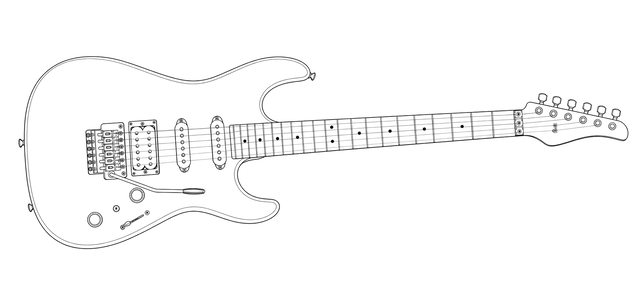
Anderson Drop Top
S-style solid-body electric guitar model
Electric guitar · United States
The Drop Top is Tom Anderson Guitarworks' signature S-style electric guitar, introduced in 1990. It features a book-matched exotic tonewood top (flame or quilted maple, walnut, or koa) 'dropped' over a tonewood back of alder, mahogany, swamp ash, or basswood to create a contoured forearm bevel, paired with a bolt-on Anderson neck.
-
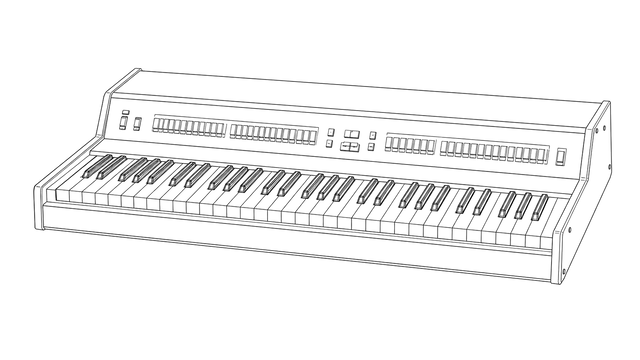
ARP Omni
Polyphonic analog synthesizer
Synthesizer · United States
The ARP Omni, released in 1975, is a polyphonic synthesizer that combined a popular string-ensemble section with a polyphonic synth and a bass voice. One of ARP's best-selling instruments, its lush strings were widely used in 1970s pop and rock.
-
Realistic Concertmate MG-1
Synthesizer model
Synthesizer · United States
The Realistic Concertmate MG-1 is an analog synthesizer built by Moog Music and sold through Radio Shack in the early 1980s under its Realistic brand. A consumer-oriented instrument, it offered genuine Moog circuitry—including the Moog filter—at a low price.
-
Polymoog
Synthesizer model
Synthesizer · United States
The Polymoog, produced from 1975, was Moog's early fully polyphonic synthesizer, using divide-down organ-style circuitry so that every key could sound at once. It offered preset voices and resonant filters, and its distinctive 'Vox Humana' patch became iconic.
-
Multimoog
Monophonic analog synthesizer
Synthesizer · United States
The Multimoog is a monophonic analog synthesizer Moog introduced in 1978 as a more capable sibling to the Micromoog. It offers two oscillators, a pressure-sensitive keyboard for added expression, and the signature Moog filter.
-
Moog Source
Digitally controlled analog monophonic synthesizer with patch memory
Synthesizer · United States
The Moog Source, released in 1981, is a monophonic analog synthesizer notable for its flat membrane control panel and for being the first Moog synth with patch memory. It offers two oscillators, the Moog filter, and a built-in sequencer.
-
Moog Rogue
Monophonic analog synthesizer
Synthesizer · United States
The Moog Rogue is an inexpensive monophonic analog synthesizer released in 1981, with two oscillators and the Moog filter in a small, simple package aimed at beginners and bass duties.
-
Micromoog
Monophonic analog synthesizer
Synthesizer · United States
The Micromoog is a compact, affordable monophonic analog synthesizer Moog produced from 1975, featuring a single oscillator, the classic Moog ladder filter, and a ribbon controller for expressive pitch effects.
-
Moog Prodigy
Synthesizer model
Synthesizer · United States
The Moog Prodigy is a compact two-oscillator monophonic analog synthesizer produced from 1979. Designed as an affordable, easy-to-use instrument, its punchy bass and lead sounds and Moog filter made it a popular entry point to the Moog sound.
-
Memorymoog
1982 polyphonic analog synthesizer
Synthesizer · United States
The Memorymoog, released in 1982, was Moog's most ambitious polyphonic synthesizer, offering six voices each with three oscillators for a huge, lush sound. Powerful but initially troubled by tuning instability, it is now prized as one of the richest-sounding vintage analog polysynths.
-
Goodall Concert Jumbo
Mid-large steel-string acoustic guitar
Steel-string guitar · United States
The Concert Jumbo is a Goodall steel-string guitar sized slightly smaller than the Standard series and larger than the Grand Concert. James Goodall added it in November 1998 in response to requests for a more comfortable body that still retained a large soundboard area, and it has become a favored size among Goodall owners.
-
Sequential TOM
A cheaper Drumtraks with programmable tuning
Drum machine · United States
TOM was Sequential's budget machine: fewer voices than Drumtraks, tape sound-loading, and a following among people who like their drum machines slightly wrong.
-
Sequential Drumtraks
Sequential Circuits' sampled drum machine
Drum machine · United States
Drumtraks put thirteen sampled voices, individual tuning, and MIDI into a machine aimed squarely at the LinnDrum, and its chips can be swapped for other sounds — which is why no two are quite alike now.
-
Linn 9000
Drum machine and MIDI sequencer in one
Drum machine · United States
The 9000 combined sampled drums, velocity-sensitive pads, and a 32-track MIDI sequencer, and its sampling option arrived as an upgrade. It was ambitious enough to help bankrupt the company, and its ideas went straight into the MPC.
-
Oberheim DX
The DMX with fewer voices and the same character
Drum machine · United States
The DX carried the DMX's sound into a smaller, cheaper machine with six voices and swappable sound chips, and shares its reputation among people who own both.
-
Oberheim DMX
The drum machine of early hip-hop
Drum machine · United States
The DMX sampled real drums like the LM-1 but sounded harder and cost less, with individual outputs and tuning per voice. Run-DMC, Afrika Bambaataa, New Order, and Davy DMX — who took his name from it — made it the defining rhythm box of the early 1980s.
-
Alesis HR-16
Sixteen-bit drums at a garage-band price
Drum machine · United States
The HR-16 put forty-nine sixteen-bit samples and a proper sequencer into a machine costing a few hundred dollars, and made a decent-sounding drum machine ordinary equipment rather than a studio purchase.
-
Alesis SR-16
Probably the best-selling drum machine ever made
Drum machine · United States
The SR-16 stayed in production for decades on the strength of two things: velocity-switched samples with real ambience, and a price that made it the default metronome-with-a-personality for every guitarist and songwriter who owned one.
-
LinnDrum
The LM-1 made affordable, and everywhere
Drum machine · United States
The LinnDrum (LM-2) cut the LM-1's price by more than half and sold ten times as many. Its snare, handclap, and cabasa are so recorded that hearing them now dates a track to within a couple of years.
-
E-mu SP-12
Sampling drum machine, and the SP-1200's parent
Drum machine · United States
The SP-12 let a producer sample their own drums into a twelve-bit machine with a sequencer, and its Turbo version added enough memory to be usable. Everything the SP-1200 is famous for starts here.