Models
Every model, most significant first.
46 models
-
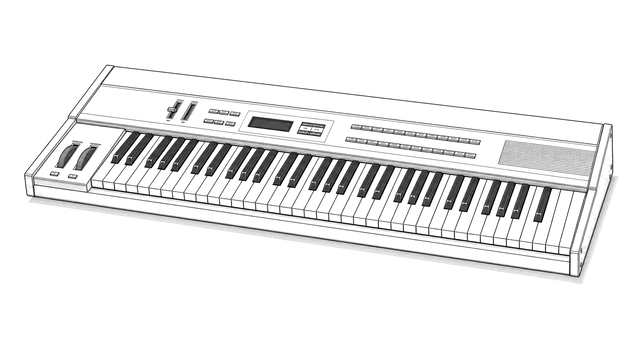
Yamaha DX7
Six-operator FM digital synthesizer
Synthesizer · Japan
Yamaha's landmark six-operator FM digital synthesizer, introduced in May 1983.
-
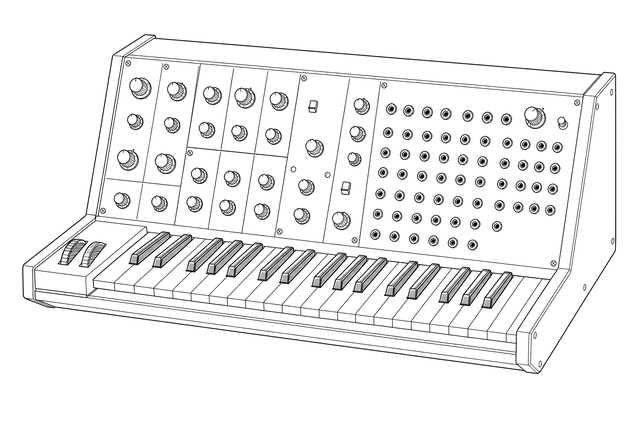
Korg MS-20
Patchable semi-modular monophonic analog synthesizer
Synthesizer · Japan
The Korg MS-20, released in 1978, is a patchable semi-modular monophonic analog synthesizer with two oscillators and a distinctive dual filter capable of aggressive resonance. Its hands-on patch bay and external signal processor made it a hugely influential and enduring instrument.
-
Gibson Lucille
Electric guitar model
United States
B.B. King's signature guitar, based on the ES-355 but built without f-holes to cut down on feedback at high volume. Named after King's own guitar, it features stereo wiring and a Varitone tone selector for a refined, smooth voice.
-
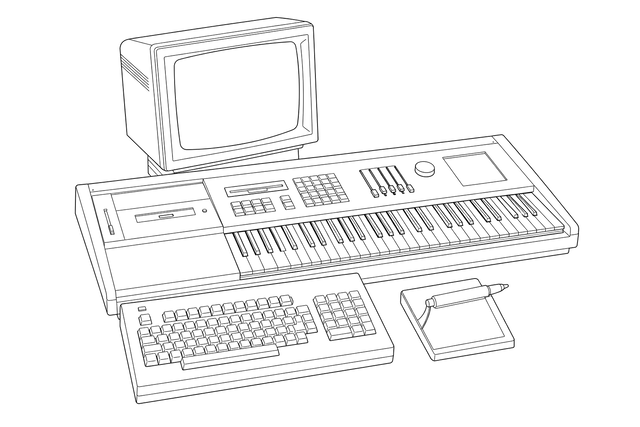
Fairlight CMI
Digital audio workstation
Synthesizer · Australia
The Fairlight CMI (Computer Musical Instrument), introduced in 1979, was one of the first commercial digital sampling workstations. Pairing a sampler with a light-pen computer interface and the influential 'Page R' sequencer, it transformed 1980s pop production despite its very high cost.
-
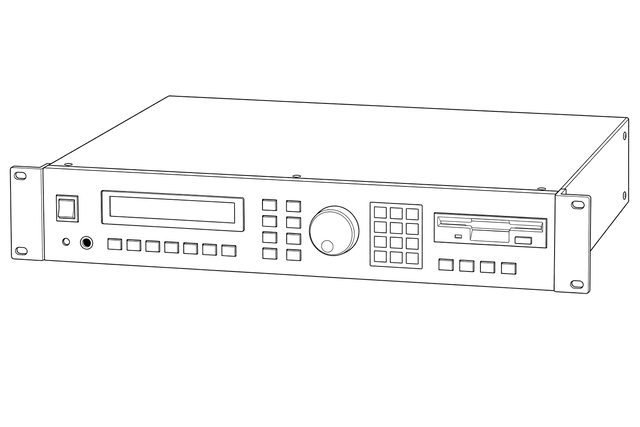
Akai S1000
1988 16-bit professional stereo digital sampler
Sampler · Japan
The Akai S1000, released in 1988, is a rackmount 16-bit stereo digital sampler that set a professional standard for sampling in the late 1980s and 1990s, with high audio quality, flexible editing, and wide library support.
-
Soldano SLO-100
100-watt high-gain tube amplifier head
Amplifier · United States
The Soldano Super Lead Overdrive 100 (SLO-100), introduced in 1987 by Mike Soldano, is a 100-watt all-tube guitar amplifier head with Normal and Overdrive channels, powered by four 5881/6L6 tubes. It is widely credited as a benchmark modern high-gain design and is hand wired in the USA.
-
Diezel VH4
100-watt four-channel tube amplifier head
Amplifier · Germany
The Diezel VH4 is a 100-watt all-tube guitar amplifier head driven by four KT77 power tubes, with four independently voiced preamp channels (Clean, Crunch, Mega, Lead), each with its own gain, EQ, and master. A benchmark high-gain amplifier, it is hand-built in Germany.
-
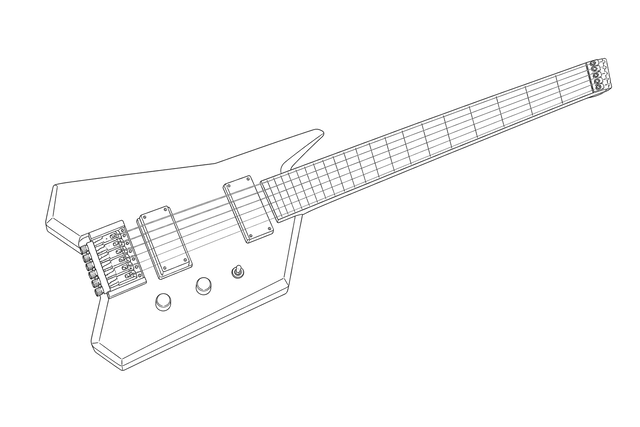
Bond Electraglide
Electric guitar made in England in the mid-1980s
Electric guitar · United Kingdom
A futuristic British electric guitar of the mid-1980s, the Electraglide had a molded carbon-fiber body, a stepped fingerboard in place of conventional frets, and a digital control panel with an electroluminescent readout. Hugely ambitious and expensive, it was a commercial failure that helped sink its maker.
-
Bogner Ecstasy
Multi-channel tube guitar amplifier
Amplifier · United States
The Bogner Ecstasy, introduced in 1992, is Bogner Amplification's flagship multi-channel tube guitar amplifier. It is offered with selectable 6L6 (American voicing) or EL34 (British voicing) power tubes and is known for its versatile clean, Blue, and Red channels spanning sparkling cleans to saturated high gain.
-
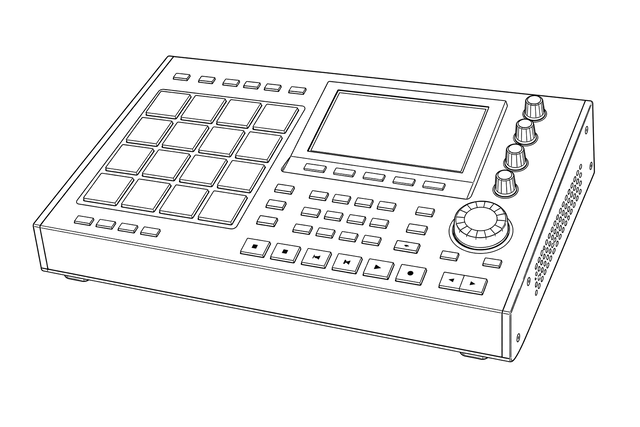
Akai MPC
Electronic musical instrument
Synthesizer · Japan
The Akai MPC (MIDI Production Center) is a family of sampler-sequencers, first released in 1988, that combined sampling, drum-pad performance, and sequencing in one unit. Developed with Roger Linn, the MPC became a central tool of hip-hop and electronic production and remains an industry standard.
-
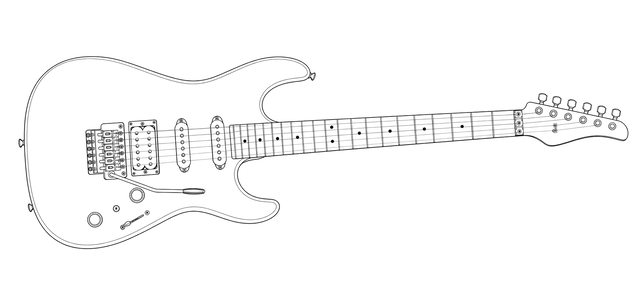
Anderson Drop Top
S-style solid-body electric guitar model
Electric guitar · United States
The Drop Top is Tom Anderson Guitarworks' signature S-style electric guitar, introduced in 1990. It features a book-matched exotic tonewood top (flame or quilted maple, walnut, or koa) 'dropped' over a tonewood back of alder, mahogany, swamp ash, or basswood to create a contoured forearm bevel, paired with a bolt-on Anderson neck.
-
Yamaha DX1
DX Series FM digital synthesizer
Synthesizer · Japan
A Yamaha DX Series FM digital synthesizer introduced in 1983 and part of the original DX Series lineup discussed in Yamaha's official synth history.
-
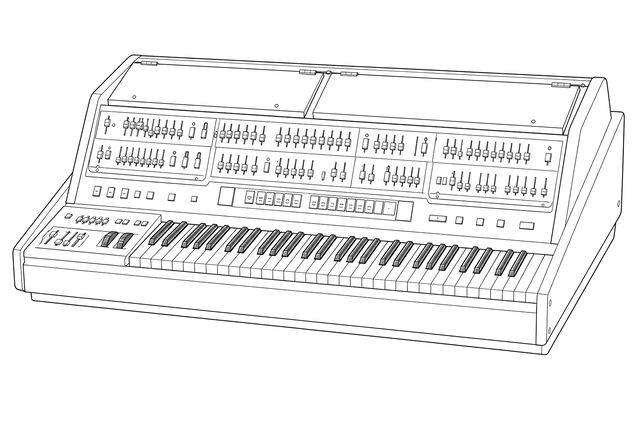
Yamaha CS-80
Flagship CS Series polyphonic analog synthesizer
Synthesizer · Japan
The flagship Yamaha CS Series polyphonic analog synthesizer; Yamaha's official history says it debuted in 1977 with eight-note polyphony.
-
Jackson Kelly
Explorer-style electric guitar series
Electric guitar
The Jackson Kelly is an angular, Explorer-derived series with an offset pointed body, offered from X and Pro models to USA versions, typically with neck-through construction and high-output humbucking pickups.
-
Yamaha DX5
DX Series FM digital synthesizer
Japan
A Yamaha DX Series FM digital synthesizer introduced in 1985 and discussed in Yamaha's official synth history.
-
Roland JC-120 Jazz Chorus
120-watt solid-state stereo combo amplifier
Amplifier · Japan
The Roland JC-120 Jazz Chorus, introduced in 1975, is a 120-watt solid-state guitar combo amplifier with two 12-inch speakers and Roland's signature built-in stereo chorus. Widely regarded as a benchmark for clean guitar tone, it has remained in continuous production for decades.
-
Yamaha CS-5
Compact monophonic analog synthesizer
Japan
A compact Yamaha CS Series monophonic analog synthesizer introduced in 1978.
-
Yamaha GS-1
Digital keyboard with FM tone generation
Synthesizer · Japan
A Yamaha digital keyboard released in 1981 with FM tone generation and touch-sensitive control.
-
Yamaha CS-20M
CS Series analog synthesizer
Japan
A Yamaha CS Series synthesizer released in 1979 with digital technology for storing sounds.
-
Yamaha CS6x
Synthesizer from Yamaha
Synthesizer · Japan
The Yamaha CS6x is a sample-based synthesizer from around 2000 combining AWM2 sample playback with virtual-analog-style control and effects, aimed at performers wanting hands-on sound shaping.
-
Yamaha CS-70M
CS Series analog synthesizer
Japan
A Yamaha CS Series synthesizer introduced in 1981 with auto-tune and a built-in sequencer.
-
Korg MS-10
Musical synthesizer
Synthesizer · Japan
The Korg MS-10, released in 1978, is a compact patchable monophonic analog synthesizer with a single oscillator and Korg's characterful filter. Part of the semi-modular MS series, it offers a small patch bay for routing and remains popular for gritty bass and effects.
-
Korg BX-3
Dual-manual drawbar organ
Organ · Japan
The two-manual version of Korg's CX-3 clonewheel organ, with two 61-note waterfall keyboards and two sets of nine drawbars that can be combined into an 18-drawbar palette in EX mode. It uses Korg's REMS tonewheel modeling and provides per-manual vibrato, chorus, and percussion with an expression pedal. First produced in 1979 and reissued as an all-digital instrument in 2003.
-
Korg CX-3
Single-manual drawbar organ
Organ · Japan
A single-manual clonewheel organ from Korg with nine drawbars, designed to recreate the sound of an electromechanical tonewheel organ and rotary speaker. Introduced in 1979 as a compact alternative to heavy console organs, it was reissued in 2001 as an all-digital instrument using Korg's REMS modeling with a 61-note waterfall keyboard.
-
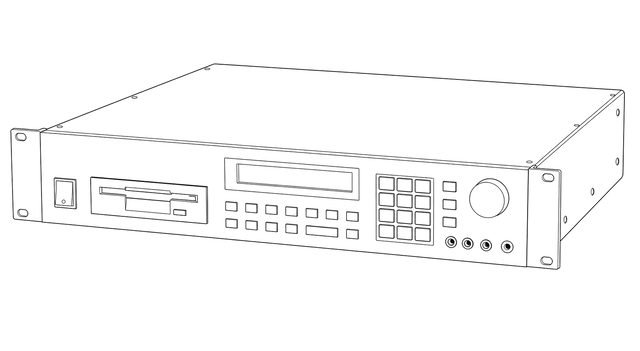
Akai S900
1986 12-bit professional digital sampler
Sampler · Japan
The Akai S900, released in 1986, is a rackmount 12-bit digital sampler that brought professional sampling to a wider market. Its characterful lo-fi sound and MIDI control made it a studio standard of the late 1980s.
-
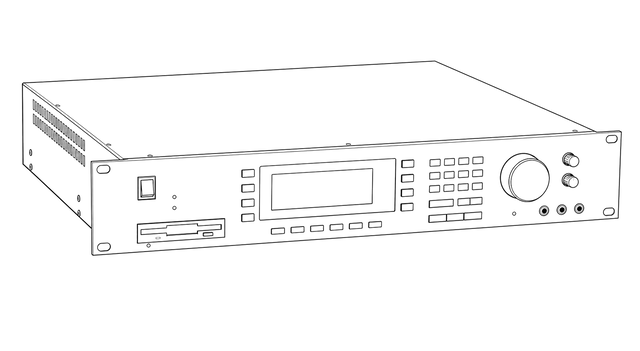
Akai S3000XL
The Akai S3000XL is a sampler with 32 polyphonic voices, and 2 MB of built-in RAM.
Sampler · Japan
The Akai S3000XL is a rackmount professional digital sampler in Akai's S3000 series, offering high-quality 16-bit sampling, extensive editing, and broad compatibility for studio production.
-
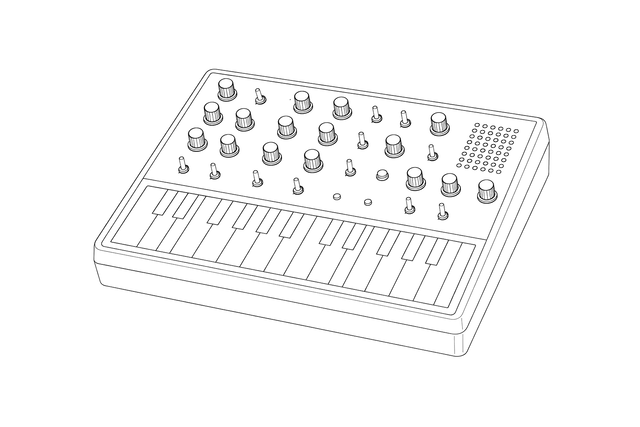
EDP Wasp
Analogue music synthesiser
Synthesizer · United Kingdom
The EDP Wasp, released in 1978 by Electronic Dream Plant, is a compact, inexpensive hybrid synthesizer with digital oscillators and an analog filter. Its distinctive black-and-yellow touch keyboard and aggressive sound made it a memorable and influential budget instrument.
-
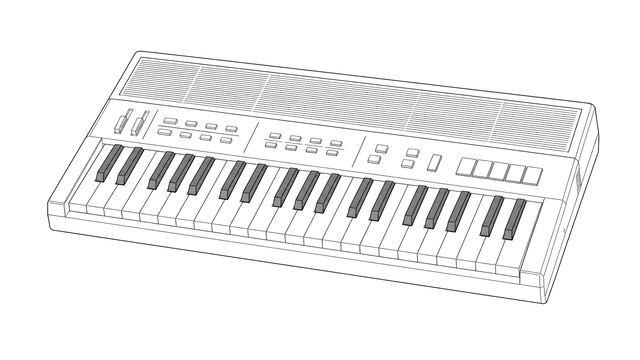
Casio MT-40
Electronic keyboard
Electronic keyboard · Japan
The Casio MT-40 is a small consumer Casiotone keyboard from the early 1980s. Though a budget home instrument, its preset rhythm and bass patterns became foundational to Jamaican dancehall through the 'Sleng Teng' riddim.
-
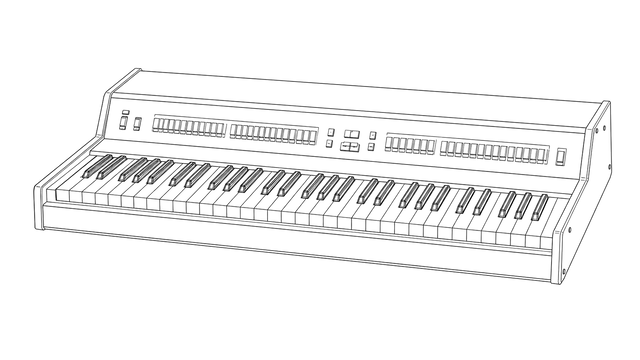
ARP Omni
Polyphonic analog synthesizer
Synthesizer · United States
The ARP Omni, released in 1975, is a polyphonic synthesizer that combined a popular string-ensemble section with a polyphonic synth and a bass voice. One of ARP's best-selling instruments, its lush strings were widely used in 1970s pop and rock.
-
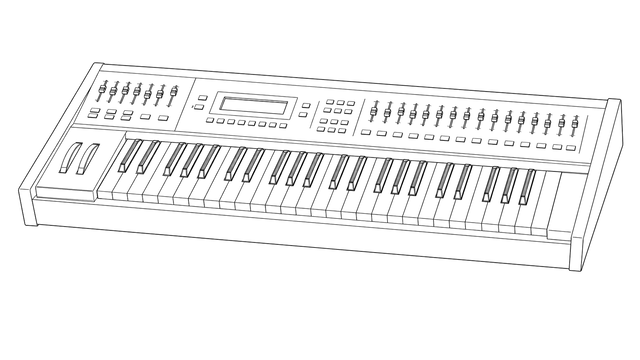
Akai AX60
Analogue synthesizer
Synthesizer · Japan
The Akai AX60, released in 1986, is a six-voice polyphonic analog synthesizer with a slider-based interface that could interface with Akai's samplers, offering warm analog sounds with MIDI control.
-
Yamaha GX-1
Concert-model Electone with polyphonic synthesizer technology
Japan
A large Yamaha concert-model Electone with eight-note polyphonic synthesizer technology, introduced in 1975 and discussed in Yamaha's official synthesizer history.
-
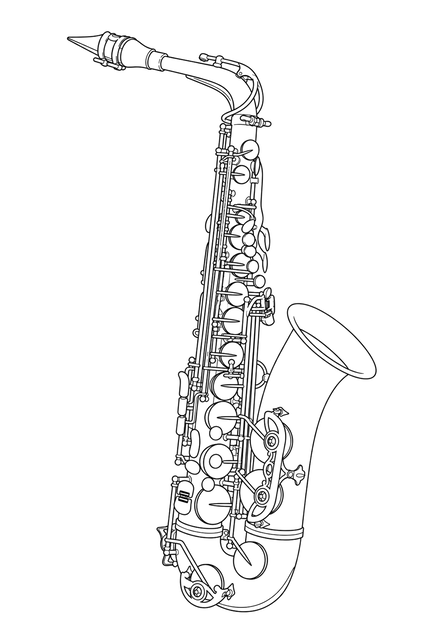
Selmer Super Action 80 Series II
Professional saxophone model family
Saxophone · France
The Henri Selmer Paris Super Action 80 Series II, usually called the Series II, is the long-running backbone of the Selmer professional saxophone catalogue. Launched in 1986 and built in sopranino, soprano, alto, tenor, baritone, and bass, it is known for an open, harmonically rich sound and strong projection, and is regarded as the versatile professional alto par excellence.
-
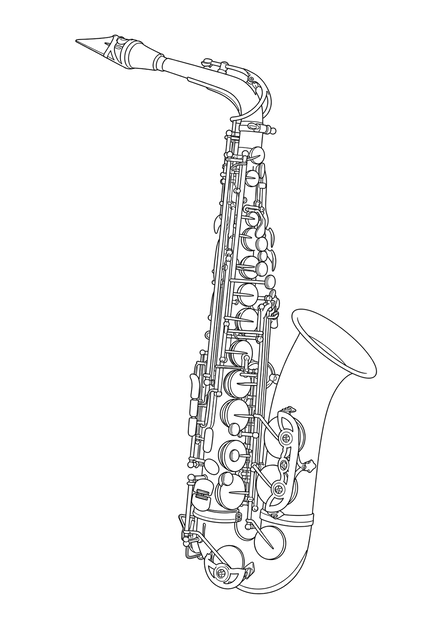
Selmer Série III
Professional saxophone model family
Saxophone · France
The Henri Selmer Paris Série III (Series III) is a professional saxophone family unveiled in 1999 and built in soprano, alto, tenor, and baritone. Its innovative design uses small pads that reduce the surface soldered to the body tube to free the instrument's resonance, giving very accurate tuning and a rich, warm timbre without aggressiveness.
-
Realistic Concertmate MG-1
Synthesizer model
Synthesizer · United States
The Realistic Concertmate MG-1 is an analog synthesizer built by Moog Music and sold through Radio Shack in the early 1980s under its Realistic brand. A consumer-oriented instrument, it offered genuine Moog circuitry—including the Moog filter—at a low price.
-
Polymoog
Synthesizer model
Synthesizer · United States
The Polymoog, produced from 1975, was Moog's early fully polyphonic synthesizer, using divide-down organ-style circuitry so that every key could sound at once. It offered preset voices and resonant filters, and its distinctive 'Vox Humana' patch became iconic.
-
Multimoog
Monophonic analog synthesizer
Synthesizer · United States
The Multimoog is a monophonic analog synthesizer Moog introduced in 1978 as a more capable sibling to the Micromoog. It offers two oscillators, a pressure-sensitive keyboard for added expression, and the signature Moog filter.
-
Moog Source
Digitally controlled analog monophonic synthesizer with patch memory
Synthesizer · United States
The Moog Source, released in 1981, is a monophonic analog synthesizer notable for its flat membrane control panel and for being the first Moog synth with patch memory. It offers two oscillators, the Moog filter, and a built-in sequencer.
-
Moog Liberation
Keytar synthesizer
Keyboard
The Liberation is a strap-on keyboard synthesizer Moog introduced in 1980, one of the first keytars. Worn like a guitar, it combines monophonic and polyphonic sections with a guitar-style neck controller for pitch bend and modulation, freeing the player from a stationary keyboard.
-
Moog Opus 3
Polyphonic ensemble keyboard (paraphonic multi-keyboard) designed by Herb Deutsch
Keyboard
The Opus 3 is an ensemble keyboard Moog released in 1980, designed by Herb Deutsch. It is an affordable divide-down instrument offering string, organ, and brass ensemble voices that can be mixed together, aimed at players wanting lush layered sounds without a large modular system.
-
Moog Rogue
Monophonic analog synthesizer
Synthesizer · United States
The Moog Rogue is an inexpensive monophonic analog synthesizer released in 1981, with two oscillators and the Moog filter in a small, simple package aimed at beginners and bass duties.
-
Micromoog
Monophonic analog synthesizer
Synthesizer · United States
The Micromoog is a compact, affordable monophonic analog synthesizer Moog produced from 1975, featuring a single oscillator, the classic Moog ladder filter, and a ribbon controller for expressive pitch effects.
-
Moog Prodigy
Synthesizer model
Synthesizer · United States
The Moog Prodigy is a compact two-oscillator monophonic analog synthesizer produced from 1979. Designed as an affordable, easy-to-use instrument, its punchy bass and lead sounds and Moog filter made it a popular entry point to the Moog sound.
-
Memorymoog
1982 polyphonic analog synthesizer
Synthesizer · United States
The Memorymoog, released in 1982, was Moog's most ambitious polyphonic synthesizer, offering six voices each with three oscillators for a huge, lush sound. Powerful but initially troubled by tuning instability, it is now prized as one of the richest-sounding vintage analog polysynths.
-
Goodall Concert Jumbo
Mid-large steel-string acoustic guitar
Steel-string guitar · United States
The Concert Jumbo is a Goodall steel-string guitar sized slightly smaller than the Standard series and larger than the Grand Concert. James Goodall added it in November 1998 in response to requests for a more comfortable body that still retained a large soundboard area, and it has become a favored size among Goodall owners.
-
Buffet Crampon RC
Professional B-flat clarinet
Clarinet · France
The Buffet Crampon RC is a professional Boehm-system clarinet developed in 1975 by luthier Robert Carree. It introduced the RC bore, giving an easy response and a homogeneous sound across all registers, and anchors Buffet's RC bore family. Made of grenadilla and offered in B-flat, A, and E-flat.
-
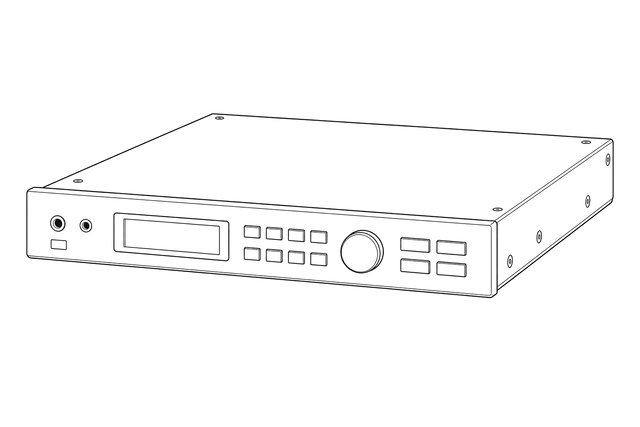
Akai SG01v
Sound module model
Synthesizer · Japan
The Akai SG01v is a General MIDI-compatible sound module released in 1995, providing a library of sampled instrument sounds for playback from a MIDI sequencer or controller.