Category
Sequencers
Hardware step and pattern sequencers that store and play back note, control, and timing data to drive other instruments, without generating their own primary voice.
Models
-
Squarp Hapax
France
The Squarp Hapax, released in 2022 by Squarp Instruments, is a high-end standalone hardware sequencer capable of running two full projects simultaneously. Each project holds 16 tracks with 16 patterns each, with MIDI DIN, USB MIDI, and CV/Gate connectivity, and more than 180 physical controls. The Hapax was the first hardware sequencer to offer complete recording support for MIDI Polyphonic Expression (MPE).
-
Arturia Step Series
France
The Arturia Step series is the company's family of portable controller-sequencers, combining keyboard or pad control with multi-track polyphonic step sequencing, arpeggiation, and CV/MIDI connectivity, including the KeyStep and the BeatStep Pro.
-
Arturia KeyStep
France
The Arturia KeyStep, released in 2017, is a portable controller and sequencer with a 32-note slim keybed featuring velocity and aftertouch. It provides a polyphonic step sequencer with eight 64-step patterns, an eight-mode arpeggiator, chord play, and CV/Gate, MIDI, USB, and DIN sync connectivity for driving analog and digital instruments.
-
Squarp Pyramid
France
The Squarp Pyramid, first released in 2015 by Squarp Instruments, is a standalone hardware sequencer offering up to 64 tracks of MIDI, USB MIDI, and CV/Gate sequencing. It combines step sequencing, real-time recording, loop-based recording, and a suite of built-in effects and chord/arpeggio generators in a compact desktop unit. The Pyramid was sold as a legacy product after the introduction of the Hapax.
-
Arturia BeatStep Pro
France
The Arturia BeatStep Pro, released in 2015, is a hardware step sequencer and MIDI/CV controller featuring two independent 16-step melodic sequencers and one 16-track drum sequencer. It connects via USB, MIDI DIN, and CV/Gate outputs, allowing simultaneous control of synthesizers, drum machines, and modular gear. Its affordable price and versatile routing made it a popular centerpiece for electronic music production rigs.
-
Roland MicroComposer
Japan
The MicroComposer series is Roland's line of early microprocessor-based hardware sequencers used to program analog synthesizers with precise note and control data. It includes the pioneering MC-8 and the later, more compact MC-4.
-
Roland MC-4 Microcomposer
Synthesizer · Japan
The Roland MC-4 MicroComposer, released in 1981, is a microprocessor-based digital sequencer that let musicians program precise note, gate, and control data to drive analog synthesizers. A successor to the MC-8, it became an important tool in early electronic and synth-pop production.
-
Korg SQ-64
Japan
The Korg SQ-64, announced in November 2020, is a polyphonic hardware step sequencer with four tracks — three melodic tracks supporting up to eight notes of polyphony each and a 16-sub-track drum track — all with up to 64 steps per pattern. It offers MIDI DIN in/out, USB, CV/Gate outputs per melodic track, and individual drum trigger outputs, making it a flexible hub for sequencing both synthesizers and modular gear.
-
Oberheim DSX
Synthesizer · United States
The Oberheim DSX is a digital sequencer released in 1981 as part of Oberheim's integrated 'System' alongside the OB-Xa synthesizer and DMX drum machine. It recorded and played back note data to automate performances in the early days of integrated electronic setups.
-
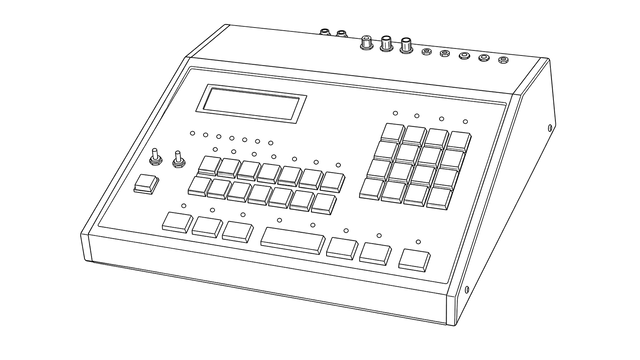
EDP Spider
Synthesizer · United Kingdom
The EDP Spider is an early digital sequencer from Electronic Dream Plant, designed to step- and real-time-sequence the company's synthesizers such as the Wasp. It was among the affordable microprocessor-based sequencers that appeared at the end of the 1970s.
-
Roland MC-8 Microcomposer
Synthesizer · Japan
The Roland MC-8 MicroComposer, released in 1977, was one of the first commercially available microprocessor-controlled music sequencers. It used a numeric keypad and computer-style memory to program detailed control data for synthesizers, pioneering the digital sequencing of analog gear.
Sources
Makers
-
Electronic Dream Plant
Electronic Dream Plant was a British synthesizer firm of the late 1970s and early 1980s, known for the compact Wasp synthesizer.
-
Korg
Korg is a Japanese maker of electronic musical instruments founded in 1963, producing synthesizers, keyboards, drum machines, tuners, and effects.
-
Arturia
Arturia is a French maker of electronic instruments and software founded in 1999, known for analog synthesizers, software recreations of classic synths, and MIDI controllers.
-
Squarp Instruments
Squarp Instruments is a French maker of standalone hardware sequencers, founded in the early 2010s. The company is best known for the Pyramid multi-track MIDI and CV sequencer and its successor, the Hapax dual-project performance sequencer. Their instruments are designed around deep compositional and performance workflows for modular and electronic music setups.
-
Roland
Roland is a Japanese maker of electronic musical instruments, including synthesizers, drum machines such as the TR-808, and the JC-120 Jazz Chorus, a benchmark solid-state guitar amplifier known for its built-in stereo chorus and produced since 1975.
Part of
-
Electronic Instruments
Electronic, electro-acoustic, and control-oriented musical devices.