Models
Every model, most significant first.
31 models
-
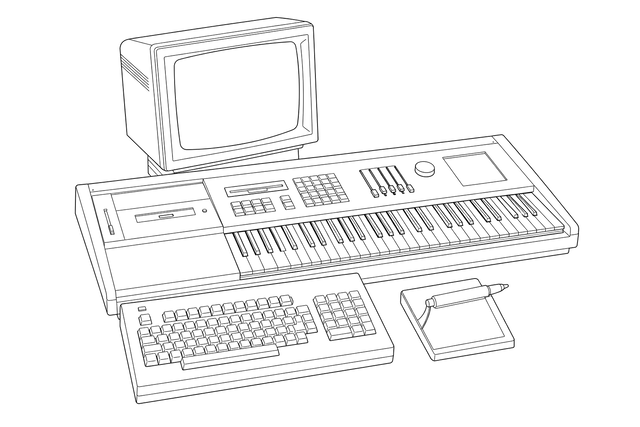
Fairlight CMI
Digital audio workstation
Synthesizer · Australia
The Fairlight CMI (Computer Musical Instrument), introduced in 1979, was one of the first commercial digital sampling workstations. Pairing a sampler with a light-pen computer interface and the influential 'Page R' sequencer, it transformed 1980s pop production despite its very high cost.
-
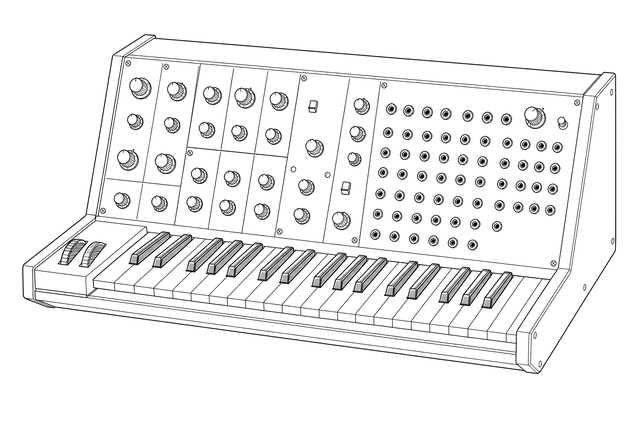
Korg MS-20
Patchable semi-modular monophonic analog synthesizer
Synthesizer · Japan
The Korg MS-20, released in 1978, is a patchable semi-modular monophonic analog synthesizer with two oscillators and a distinctive dual filter capable of aggressive resonance. Its hands-on patch bay and external signal processor made it a hugely influential and enduring instrument.
-
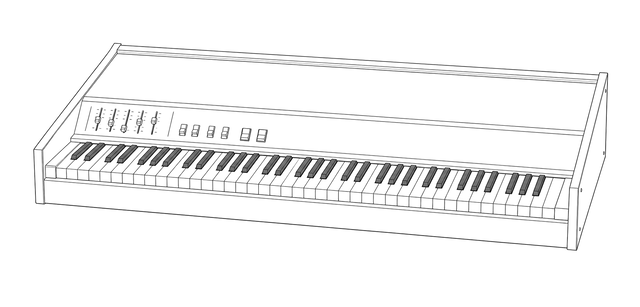
ELKA Rhapsody
Polyphonic multi-orchestral synthesizer
Synthesizer · Italy
The Elka Rhapsody is a polyphonic string synthesizer made by the Italian company Elka in the 1970s. A popular and roadworthy string machine, it produces violin- and viola-style ensemble sounds and was widely used by touring musicians.
-
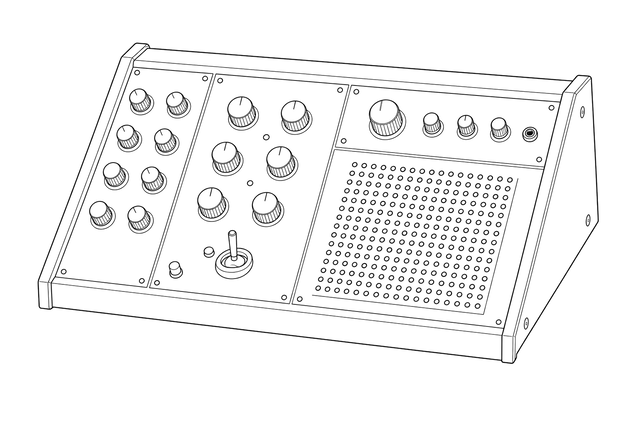
EMS VCS 3
Synthesizer model
Synthesizer · United Kingdom
The EMS VCS 3, released in 1969, is a compact British modular analog synthesizer that routes signals through a distinctive pin-matrix patch board instead of cords. Portable and idiosyncratic, it was embraced by experimental and progressive musicians and is one of the most iconic early synthesizers.
-
Ampeg SVT
300-watt all-tube bass amplifier head
Amplifier · United States
The Ampeg SVT, introduced in 1969, is a 300-watt all-tube bass amplifier head powered by six 6550 power tubes. A foundational high-power bass amp, it remains in production as the SVT-CL (Classic) and is paired with Ampeg's 8x10 cabinets for the classic SVT bass rig.
-
Rogers Dyna-Sonic
The snare with a floating snare frame
Percussion · United States
The Dyna-Sonic suspends its snare wires in a separate frame that touches the head under controlled tension rather than being pulled across it, which gives an unusually even response at low volume. It is one of the few genuinely original snare designs of the twentieth century.
-
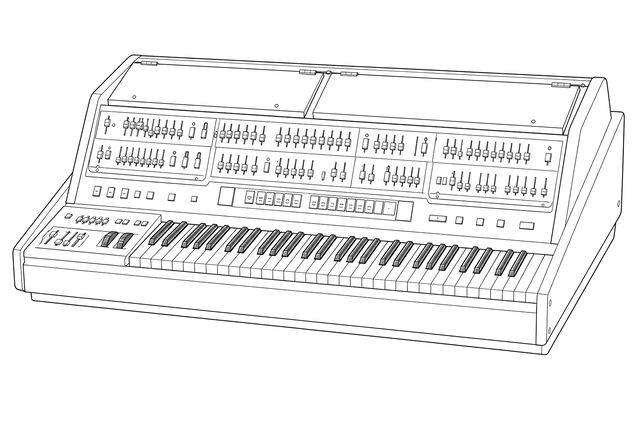
Yamaha CS-80
Flagship CS Series polyphonic analog synthesizer
Synthesizer · Japan
The flagship Yamaha CS Series polyphonic analog synthesizer; Yamaha's official history says it debuted in 1977 with eight-note polyphony.
-
Getzen Eterna
Professional brass series
Brass instrument
The Getzen Eterna series, introduced in 1964, is the company's professional brass line of trumpets, cornets, and trombones, built in Elkhorn, Wisconsin. Eterna instruments are known for fast, reliable valves and a clear, even, projecting tone.
-
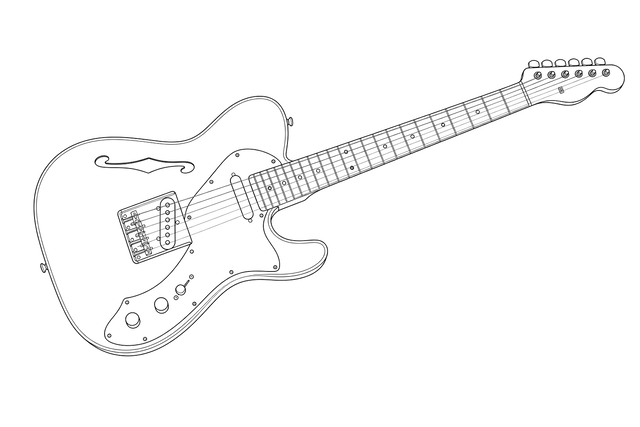
Fender Telecaster Thinline
Fender Telecaster Thinline
Electric guitar
A semi-hollow Telecaster introduced in 1968 with a routed body and a single f-hole that reduce weight and add airiness. The original kept two single-coils, while the 1972 Thinline adopted a pair of Fender Wide Range humbuckers for a thicker tone.
-
EMS Synthi AKS
Synthesizer model
Synthesizer · United Kingdom
The EMS Synthi AKS is a briefcase synthesizer that adds a built-in touch-sensitive keyboard and a simple sequencer to the Synthi A, combining EMS's pin-matrix synthesis with self-contained performance control.
-
Roland JC-120 Jazz Chorus
120-watt solid-state stereo combo amplifier
Amplifier · Japan
The Roland JC-120 Jazz Chorus, introduced in 1975, is a 120-watt solid-state guitar combo amplifier with two 12-inch speakers and Roland's signature built-in stereo chorus. Widely regarded as a benchmark for clean guitar tone, it has remained in continuous production for decades.
-
Yamaha CS-5
Compact monophonic analog synthesizer
Japan
A compact Yamaha CS Series monophonic analog synthesizer introduced in 1978.
-
Yamaha CS-20M
CS Series analog synthesizer
Japan
A Yamaha CS Series synthesizer released in 1979 with digital technology for storing sounds.
-
Korg MS-10
Musical synthesizer
Synthesizer · Japan
The Korg MS-10, released in 1978, is a compact patchable monophonic analog synthesizer with a single oscillator and Korg's characterful filter. Part of the semi-modular MS series, it offers a small patch bay for routing and remains popular for gritty bass and effects.
-
Korg BX-3
Dual-manual drawbar organ
Organ · Japan
The two-manual version of Korg's CX-3 clonewheel organ, with two 61-note waterfall keyboards and two sets of nine drawbars that can be combined into an 18-drawbar palette in EX mode. It uses Korg's REMS tonewheel modeling and provides per-manual vibrato, chorus, and percussion with an expression pedal. First produced in 1979 and reissued as an all-digital instrument in 2003.
-
Korg CX-3
Single-manual drawbar organ
Organ · Japan
A single-manual clonewheel organ from Korg with nine drawbars, designed to recreate the sound of an electromechanical tonewheel organ and rotary speaker. Introduced in 1979 as a compact alternative to heavy console organs, it was reissued in 2001 as an all-digital instrument using Korg's REMS modeling with a 61-note waterfall keyboard.
-
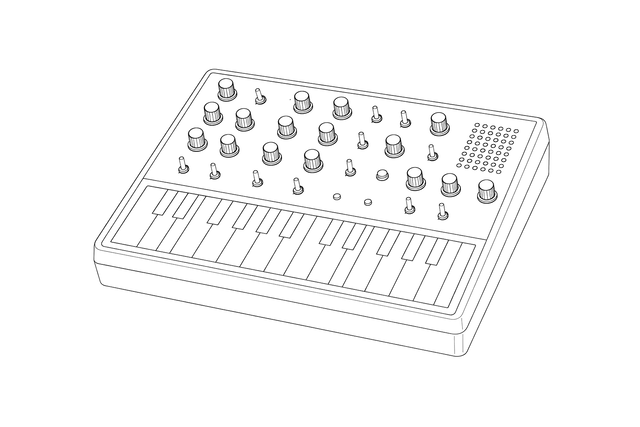
EDP Wasp
Analogue music synthesiser
Synthesizer · United Kingdom
The EDP Wasp, released in 1978 by Electronic Dream Plant, is a compact, inexpensive hybrid synthesizer with digital oscillators and an analog filter. Its distinctive black-and-yellow touch keyboard and aggressive sound made it a memorable and influential budget instrument.
-
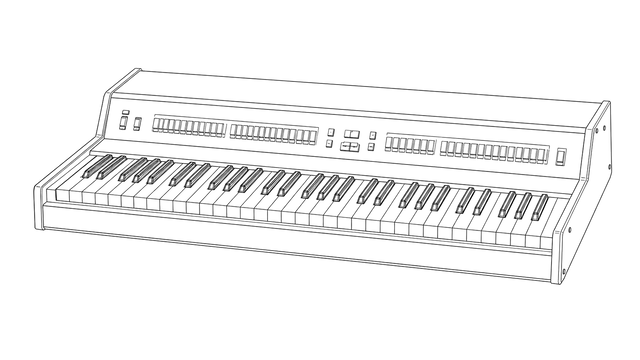
ARP Omni
Polyphonic analog synthesizer
Synthesizer · United States
The ARP Omni, released in 1975, is a polyphonic synthesizer that combined a popular string-ensemble section with a polyphonic synth and a bass voice. One of ARP's best-selling instruments, its lush strings were widely used in 1970s pop and rock.
-
Yamaha SY-1
Monophonic analog synthesizer
Japan
Yamaha's first synthesizer, a monophonic analog synthesizer released in 1974.
-
Yamaha GX-1
Concert-model Electone with polyphonic synthesizer technology
Japan
A large Yamaha concert-model Electone with eight-note polyphonic synthesizer technology, introduced in 1975 and discussed in Yamaha's official synthesizer history.
-
Polymoog
Synthesizer model
Synthesizer · United States
The Polymoog, produced from 1975, was Moog's early fully polyphonic synthesizer, using divide-down organ-style circuitry so that every key could sound at once. It offered preset voices and resonant filters, and its distinctive 'Vox Humana' patch became iconic.
-
Multimoog
Monophonic analog synthesizer
Synthesizer · United States
The Multimoog is a monophonic analog synthesizer Moog introduced in 1978 as a more capable sibling to the Micromoog. It offers two oscillators, a pressure-sensitive keyboard for added expression, and the signature Moog filter.
-
Moog Sonic Six
Duophonic analog synthesizer
Synthesizer · United States
The Moog Sonic Six is a portable duophonic analog synthesizer produced in the 1970s, housed in a briefcase-style case with a built-in speaker. Its two oscillators allow two notes at once and a wide range of modulation for leads and effects.
-
Micromoog
Monophonic analog synthesizer
Synthesizer · United States
The Micromoog is a compact, affordable monophonic analog synthesizer Moog produced from 1975, featuring a single oscillator, the classic Moog ladder filter, and a ribbon controller for expressive pitch effects.
-
Moog Prodigy
Synthesizer model
Synthesizer · United States
The Moog Prodigy is a compact two-oscillator monophonic analog synthesizer produced from 1979. Designed as an affordable, easy-to-use instrument, its punchy bass and lead sounds and Moog filter made it a popular entry point to the Moog sound.
-
Moog Satellite
Monophonic analog synthesizer
Synthesizer · United States
The Moog Satellite is a preset-oriented monophonic analog synthesizer from the 1970s, designed as an affordable combo-style instrument with a selection of ready-made voices plus some hands-on control.
-
Moog modular synthesizer
Modular analog synthesizer
Synthesizer · United States
The Moog modular synthesizer is the pioneering line of voltage-controlled modular systems Robert Moog began building in the mid-1960s. Assembled from separate oscillator, filter, amplifier, and controller modules connected by patch cords, these large systems established the architecture and sound of subtractive synthesis and shaped electronic music for decades.
-
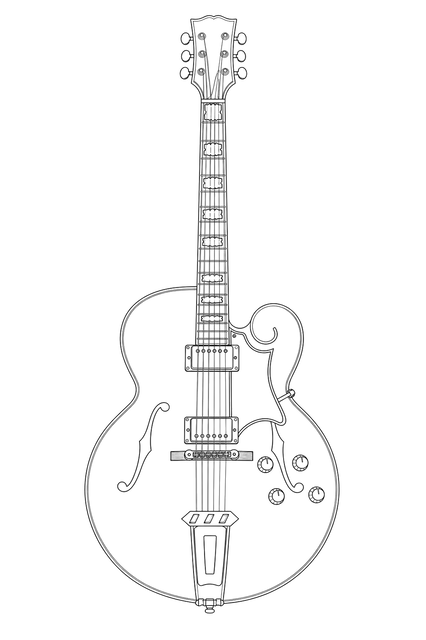
Gibson Tal Farlow
A signature Gibson archtop guitar designed by Tal Farlow
Acoustic guitar · United States
A signature archtop developed with jazz guitarist Tal Farlow and introduced in 1962, drawn from Gibson's electric archtop line. It is distinguished by a sweeping decorative inlay that curls around the cutaway.
-
Buffet Crampon RC
Professional B-flat clarinet
Clarinet · France
The Buffet Crampon RC is a professional Boehm-system clarinet developed in 1975 by luthier Robert Carree. It introduced the RC bore, giving an easy response and a homogeneous sound across all registers, and anchors Buffet's RC bore family. Made of grenadilla and offered in B-flat, A, and E-flat.
-
Ampeg B-15 Portaflex
Flip-top tube bass combo amplifier
Amplifier · United States
The Ampeg B-15 Portaflex, introduced in 1960, was the first combo amplifier built specifically for bass. It is an all-tube flip-top design with a single 15-inch speaker, prized for warm, round studio bass tone and used on countless recordings.
-
Remo Roto Tom
A headed ring you tune by spinning
Hand percussion
Roto Toms have no shell: the head sits on a threaded frame, and rotating the drum raises or lowers the pitch continuously. That makes them the only drum a player can glissando in performance, which is why they turn up in orchestral scores.