Maker
Antonio Stradivari
Cremonese luthier
A historical luthier associated with violins, violas, cellos, guitars, and other string instruments.
Models
-
Stradivari "Messiah" Violin
Violin · Italy
The 'Messiah' (Le Messie, also 'Salabue') is a 1716 golden-period violin by Antonio Stradivari, held by the Ashmolean Museum in Oxford. It is famous for being the best-preserved Stradivari in existence: it remained in Stradivari's workshop until his death in 1737, passed to Count Cozio di Salabue in 1775, and was little played thereafter. Its varnish is almost unworn, the carving remains crisp, and the painted edge-work on the scroll survives intact, making it a primary reference for the appearance of a new Stradivari instrument.
-
Stradivari "Servais" Cello
Cello · Italy
The 'Servais' is a 1701 cello by Antonio Stradivari, among the jewels of the Smithsonian's instrument collection and named for the 19th-century Belgian cellist Adrien-Francois Servais. It is Stradivari's last instrument of the large 'bassetto' type used in the 17th century and one of the few of that size never cut down to the smaller proportions Stradivari standardized after about 1707. It is renowned for an exceptionally rich, powerful tone.
-
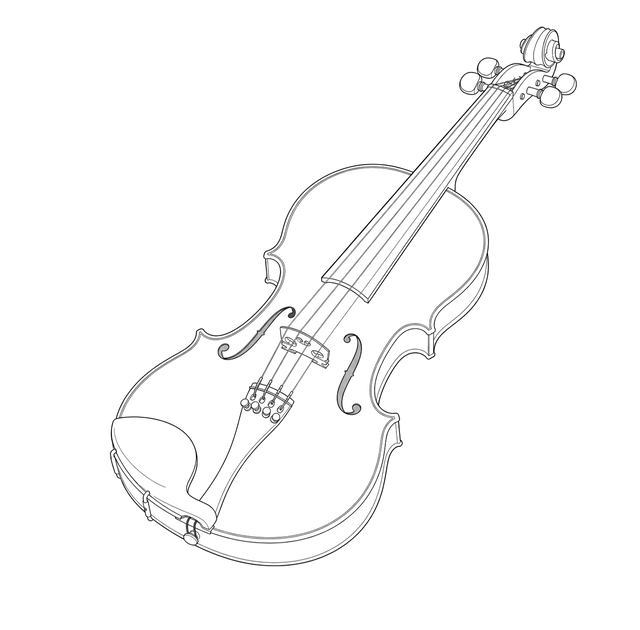
Stradivari Violin
Violin · Italy
The violins of Antonio Stradivari (Cremona, c. 1666-1737) are the most celebrated in the Western tradition, prized for their projecting, complex tone and refined construction in spruce and maple. Stradivari's output spans an early Amatise period, the experimental 'Long Pattern' of the 1690s, and the mature 'golden period' after 1700 that produced his most sought-after instruments. Surviving examples carry individual names and are held by museums, foundations, and leading soloists; several are cataloged here as exemplars.
Sources
Categories
Representative model
-
Stradivari Violin
Violin · Italy
The violins of Antonio Stradivari (Cremona, c. 1666-1737) are the most celebrated in the Western tradition, prized for their projecting, complex tone and refined construction in spruce and maple. Stradivari's output spans an early Amatise period, the experimental 'Long Pattern' of the 1690s, and the mature 'golden period' after 1700 that produced his most sought-after instruments. Surviving examples carry individual names and are held by museums, foundations, and leading soloists; several are cataloged here as exemplars.