Category
Sound Modules
Standalone electronic sound generators without a primary performance keyboard.
Models
-
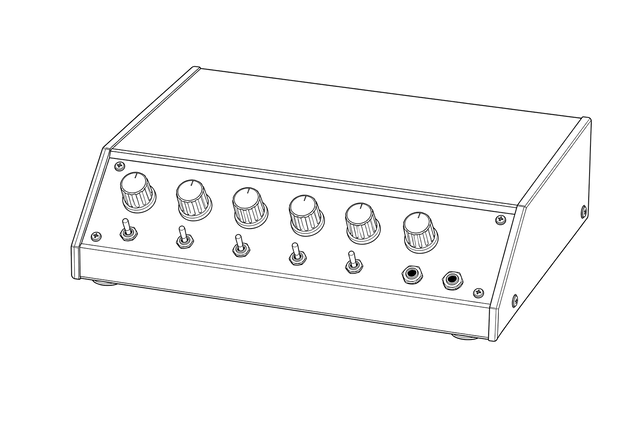
ARP Little Brother
Synthesizer · United States
The ARP Little Brother is a compact monophonic expander module designed to add an extra oscillator voice to other ARP synthesizers, extending an instrument's sound with an additional analog source.
-
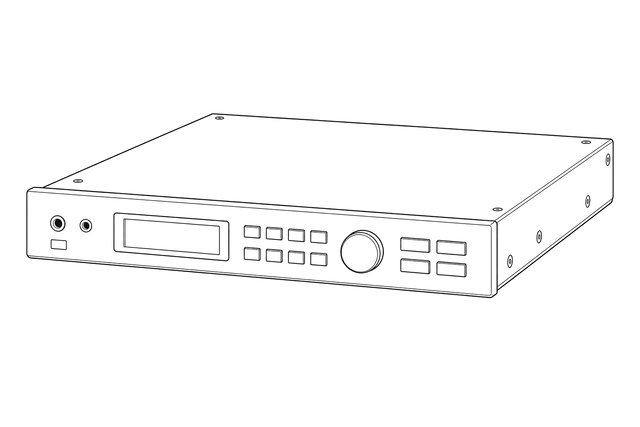
Akai SG01v
Synthesizer · Japan
The Akai SG01v is a General MIDI-compatible sound module released in 1995, providing a library of sampled instrument sounds for playback from a MIDI sequencer or controller.
-
Yamaha MU80
Synthesizer module · Japan
The Yamaha MU80, released in 1994, is a rackmount XG-format MIDI tone module with 32-voice polyphony, 16-part multitimbrality, and 729 voices including Yamaha's XG extension set. It featured built-in digital effects and was designed as a high-quality MIDI playback and performance sound module compatible with GM, GS, and the Yamaha XG standard.
-
Yamaha TX7
Japan
A keyboard-less Yamaha tone-generator module that packaged a DX7 tone generator in a distinctive case.
-
E-mu Proteus/1
Synthesizer module · United States
The E-mu Proteus/1, introduced in 1989, is a 1U rackmount sound module that played back 16-bit ROM samples across 32-voice polyphony and 16-part multitimbrality. It drew on sounds derived from E-mu's EIII sampler library and became a widely used professional sound module for orchestral and pop production in the early 1990s.
-
Roland JV-1080
Synthesizer module · Japan
The Roland JV-1080, released in 1994, is a 2U rackmount synthesizer sound module built on Roland's JV/XP sample-based synthesis engine with 64-voice polyphony and 16-part multitimbrality. It shipped with 560 patches across 16 internal banks and accepted up to four SR-JV80 series expansion boards, making it highly popular in professional studios and live rigs throughout the 1990s.
-
Yamaha TX81Z
Synthesizer · Japan
A Yamaha FM tone-generator module containing the equivalent of eight four-operator FM synthesizers.
-
Roland Sound Canvas SC-88
Synthesizer module · Japan
The Roland Sound Canvas SC-88, introduced in 1994, is a rackmount MIDI sound module that extended Roland's GS format with 654 sounds and 10 simultaneous MIDI channels expandable to 16 parts across two module stacks. It became a standard playback device for General MIDI and GS-format music files and was widely used in professional and home studios throughout the mid-to-late 1990s.
-
Yamaha TX816
Japan
A rack-mounted Yamaha TX Series FM tone-generator module capable of producing rich layered sounds.
Sources
Makers
-
Akai
Akai is a Japanese electronics company founded in 1929 and historically known for consumer audio; its name is also carried by music-production gear such as samplers and tape machines.
-
Yamaha
Yamaha is a Japanese musical instrument manufacturer founded in 1887 and one of the largest in the world, producing pianos, guitars, wind and brass instruments, drums, and a wide range of electronic instruments.
-
E-mu Systems
E-mu Systems is an American maker of electronic musical instruments founded in 1971 in Santa Cruz, California. The company pioneered affordable samplers with the Emulator series and later became widely known for its sample-based sound modules, including the Proteus family and the Vintage Keys. E-mu was acquired by Creative Technology in 1993 and ceased hardware production in the early 2000s.
-
ARP Instruments, Inc.
ARP Instruments was an American maker of electronic musical instruments founded in 1969, a leading synthesizer manufacturer of the 1970s known for the Odyssey, the 2600, and its string ensemble.
-
Roland
Roland is a Japanese maker of electronic musical instruments, including synthesizers, drum machines such as the TR-808, and the JC-120 Jazz Chorus, a benchmark solid-state guitar amplifier known for its built-in stereo chorus and produced since 1975.
Part of
-
Electronic Instruments
Electronic, electro-acoustic, and control-oriented musical devices.